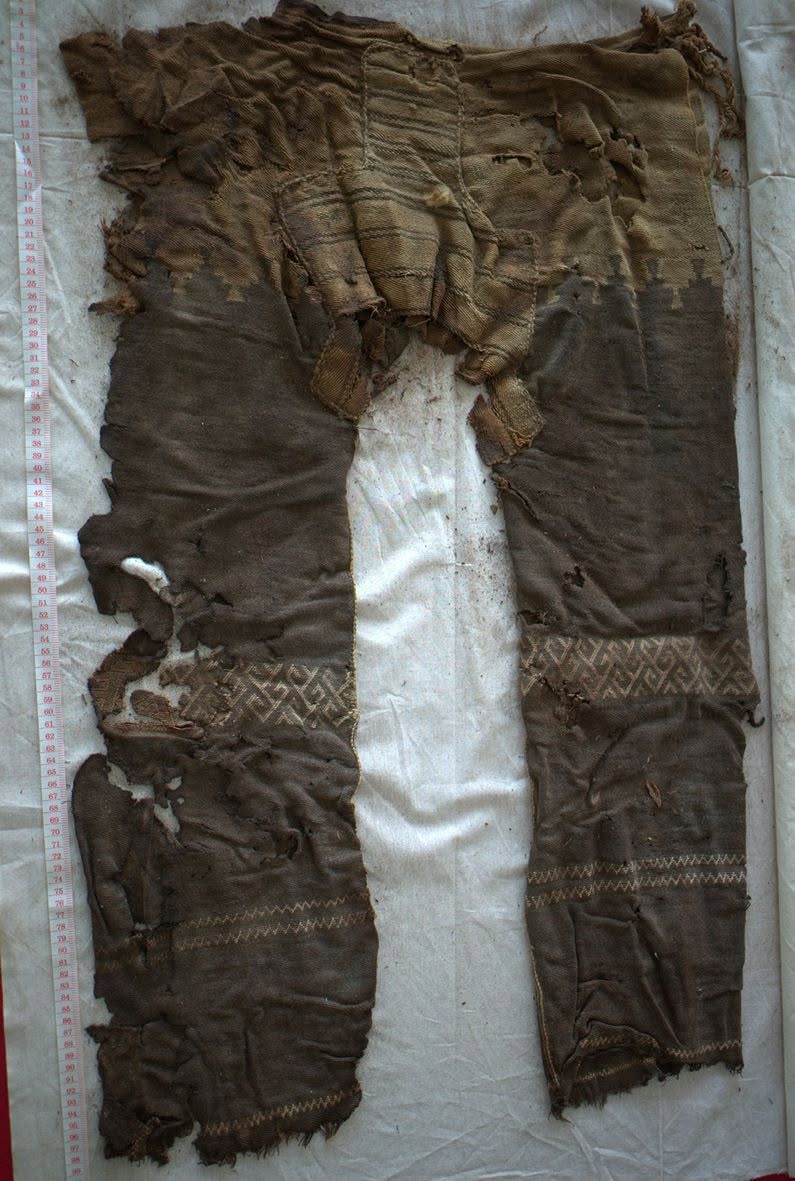
Dating back approximately $3,300$ to $3,000$ years ($13$th to $10$th century B.C.), the Yanghai trousers represent one of the most revolutionary sartorial breakthroughs in human history. Prior to this innovation, ancient populations across Eurasia predominantly wore loose garments such as tunics, robes, gowns, or a combination of loincloths and separate leggings. Discovered in an exceptional state of preservation, these wool trousers predate other known horse-riding pants by several centuries, providing a rare window into the transition from settled agricultural communities to mobile, horse-mounted pastoral lifestyles in Central Asia. As a foundational milestone in textile archaeology, this garment shifts our understanding of how ancient humans adapted their clothing to meet the functional demands of a changing world.
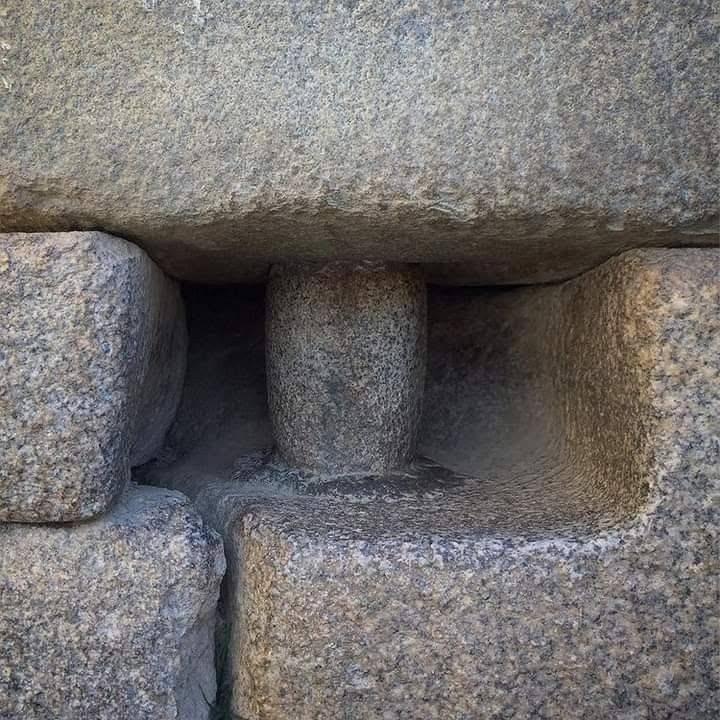
The extraordinary artifact was unearthed at the vast Yanghai graveyard, situated in the arid gravel desert of the Turpan Basin in Xinjiang, northwestern China. The hyper-arid local climate, characterized by extreme summer heat and freezing winters, combined with the alkaline desert soil to inhibit the decomposition of organic materials, allowing fragile textiles and human remains to survive millennia intact. Archaeologically, the cemetery has yielded over $500$ ancient tombs belonging to the Subeixi culture. The specific trousers analyzed were retrieved from tombs M21 and M157, entombed alongside male occupants who were interred with high-status equipment indicative of warriors and horsemen, such as wooden horse bits, leather bridles, battle-axes, and bow sheaths.
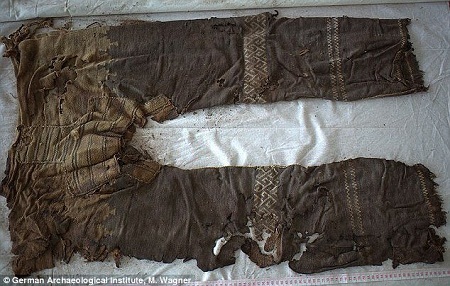
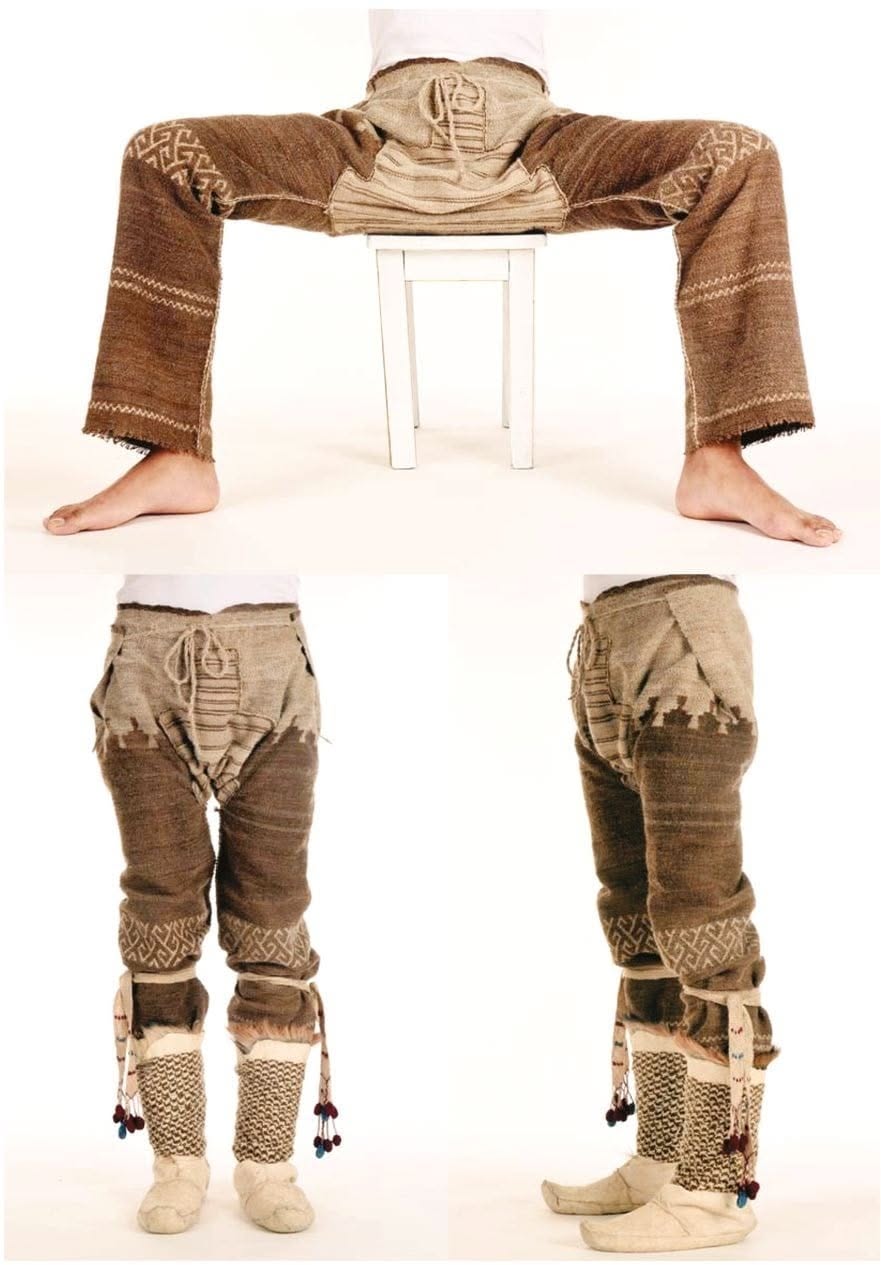
From a material and manufacturing perspective, the trousers are a masterpiece of ancient craftsmanship, constructed entirely from hand-spun wool using sophisticated weaving techniques. Rather than being cut from a single piece of fabric, the trousers are ingeniously ᴀssembled from three separately woven components: two straight-cut leg pieces and a wide, stepped, cross-shaped crotch insert designed to join the legs and cover the pelvic region. The tailoring incorporates advanced diagonal twill weaves which provided the fabric with necessary elasticity, alongside complex twining methods where multi-colored weft threads were twisted to create striking geometric patterns, including interlocking T-shapes and rhombic meandering bands across the knees. Furthermore, the waistband features side slits designed for drawstrings, demonstrating an intuitive grasp of ergonomic fastening long before the advent of modern tailoring tools.
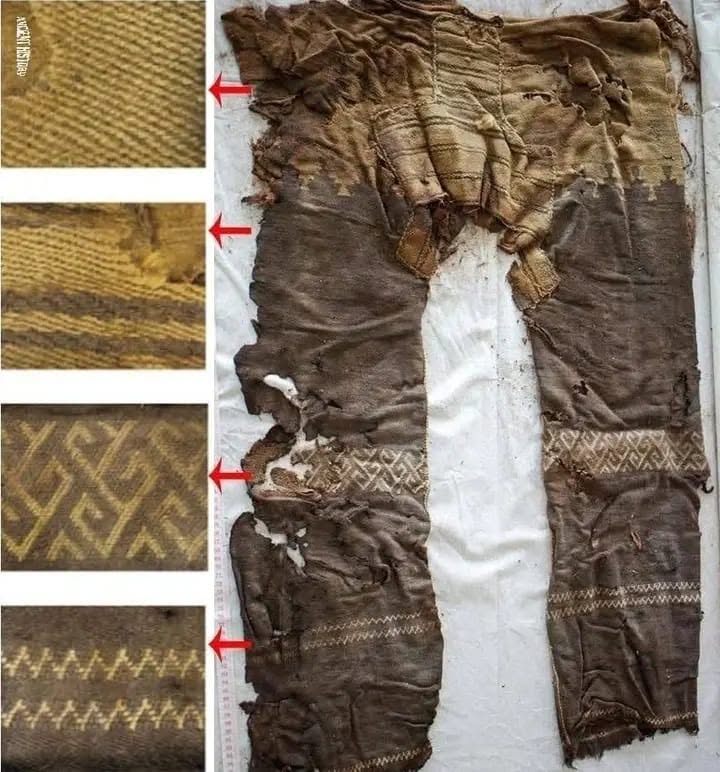
Functionally and symbolically, the invention of these trousers was directly tied to the demands of horseback riding and mounted warfare. Before the widespread mastery of equestrian tactics, riders using traditional flowing robes or open leggings faced significant vulnerability and restricted mobility while riding astride. The integration of a tailored crotch piece revolutionized personal gear by affording riders the freedom to spread their legs wide across a horse’s back while simultaneously protecting sensitive inguinal and pelvic areas from friction and injury. Beyond mere practicality, the intricate geometric ornamentation woven into the legs and calves suggests that these garments also served as markers of social idenтιтy, personal status, or tribal affiliation among elite pastoralist horsemen.
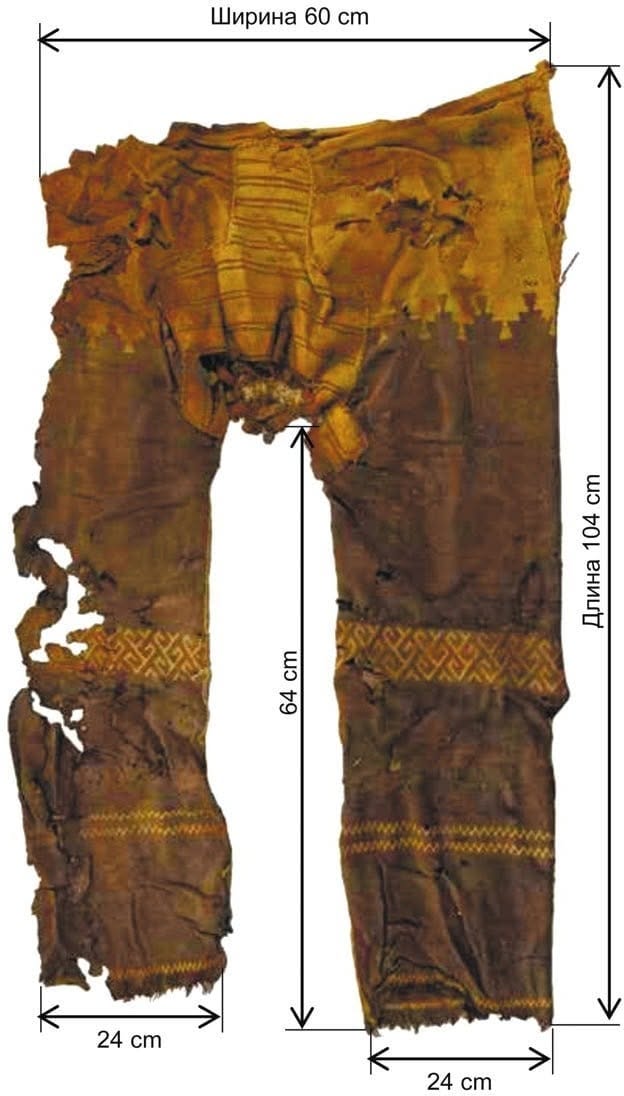
The scientific recovery and documentation of these trousers are the result of decades of meticulous excavations conducted by Chinese archaeologists since the early 1970s, complemented by subsequent interdisciplinary analyses led by international specialists such as researchers from the German Archaeological Insтιтute, including Ulrike Beck and Mayke Wagner. By utilizing advanced scientific methodologies—most notably accelerator mᴀss spectrometry radiocarbon dating on fabric samples—these researchers successfully established the true antiquity of the garments. Their collaborative investigations continue to illuminate how ancient nomadic groups transmitted knowledge, trade techniques, and cultural innovations across the vast expanses of the Eurasian continent.
💔 STELLA PARTON BREAKS HER SILENCE — What She Said About Dolly’s Health Has Fans Looking Back
Dolly Parton’s Sister Breaks Silence What Really Happened - GMT - G1
Stella Parton was born May 4, 1949, the sixth of twelve children raised by Robert Lee and Avie Lee Parton in Sevierville, Tennessee — a household defined by noise, limited money, and almost no privacy, the kind of environment that produced strong, determined personalities.
Stella was one of them.
By seven, she was appearing alongside her older sister Dolly on a Knoxville television program; by her teens, she was writing her own songs, though marriage and motherhood pulled music to the margins of her life for a stretch.
The dream never fully disappeared.

In 1967, she recorded a gospel album with her mother and sisters, and later worked clubs in Washington, D.C., before founding her own record label in 1975 and releasing “I Want to Hold You in My Dreams Tonight,” which climbed to number nine on the country charts.
Long before any of that commercial success, Stella had already shown a willingness to take positions others avoided.
At 26, amid backlash against Australian singer Olivia Newton-John for winning recognition in country music, Stella recorded “Ode to Olivia” in her defense — a stand that offered her no career benefit and real risk of criticism, but one she took anyway simply because she believed staying silent was the wrong choice.
That instinct defined the rest of her career: hits like “The Danger of a Stranger” and “Steady as the Rain” (written by Dolly) built a genuine, independent following, including in the U.K., while Stella also worked in New York theater and spoke openly, often controversially, about poverty, domestic violence, and the treatment of women in the music industry.
She was named the Christian Country Music Association’s Female Vocalist of the Year in 2004.
Through all of it, she remained defined publicly, more often than not, as simply “Dolly’s little sister” — a label she spent five decades quietly proving didn’t tell the full story.
That same directness is why her comments in the fall of 2025 carried real weight.
Stella had never positioned herself as the family’s image manager or spokesperson; she was, by reputation, someone who believed difficult truths shouldn’t stay hidden indefinitely.
What she described wasn’t dramatic or accusatory — it was a portrait of a woman who had spent years prioritizing everyone else’s needs over her own.
The context mattered.
Carl Dean, Dolly’s husband of nearly sixty years, died in March 2025 at 82, after a long illness during which Dolly had devoted herself almost entirely to his care.
She later acknowledged that in the process, she’d neglected her own health significantly.
The loss reverberated through the whole extended family — the Partons had lost three brothers in the years surrounding this period, compounding grief that, for a family that had once crowded twelve children into a single small home, meant losing pieces of a shared childhood one after another.
Stella herself went seven years without releasing new music during this stretch, later describing the period simply as one shaped by sorrow, while still speaking about the importance of finding moments of laughter within it.
Looking back, one moment reads very differently in hindsight than it did at the time: in late September 2025, Dolly postponed her planned Las Vegas residency, citing health challenges — a rare cancellation for a performer whose six-decade career had included very few of them.
At the time, most fans treated it as a minor, temporary setback.
Stella’s later reflections suggested the signs had actually been building for some time, visible to family in ways the public smile made easy to miss.
That concern crystallized publicly not long after, when Dolly’s younger sister Frieda posted a simple request on Facebook asking fans to pray for Dolly.
What looked at first like an ordinary, well-meaning gesture spread rapidly, sparking widespread speculation about how serious Dolly’s condition actually was.
Dolly herself responded directly within days, appearing in a video from a Grand Ole Opry commercial shoot, insisting with her familiar humor that she wasn’t finished yet — the now widely remembered “I ain’t dead yet” moment that briefly quieted public concern.
In the months that followed, the pattern repeated: reassuring updates about kidney stones, dehydration, and treatment, paired with continued work on new projects, right up until Dolly Parton’s death on August 25, 2026, at 80.
Looking back across that full timeline — the postponed residency, the family’s public worry, Stella’s own account of a sister who consistently deprioritized her own wellbeing — it becomes easier to see what the people closest to Dolly understood well before the rest of the world did: that the warmth and resilience the public saw every time she appeared on camera came at a real, largely invisible cost.