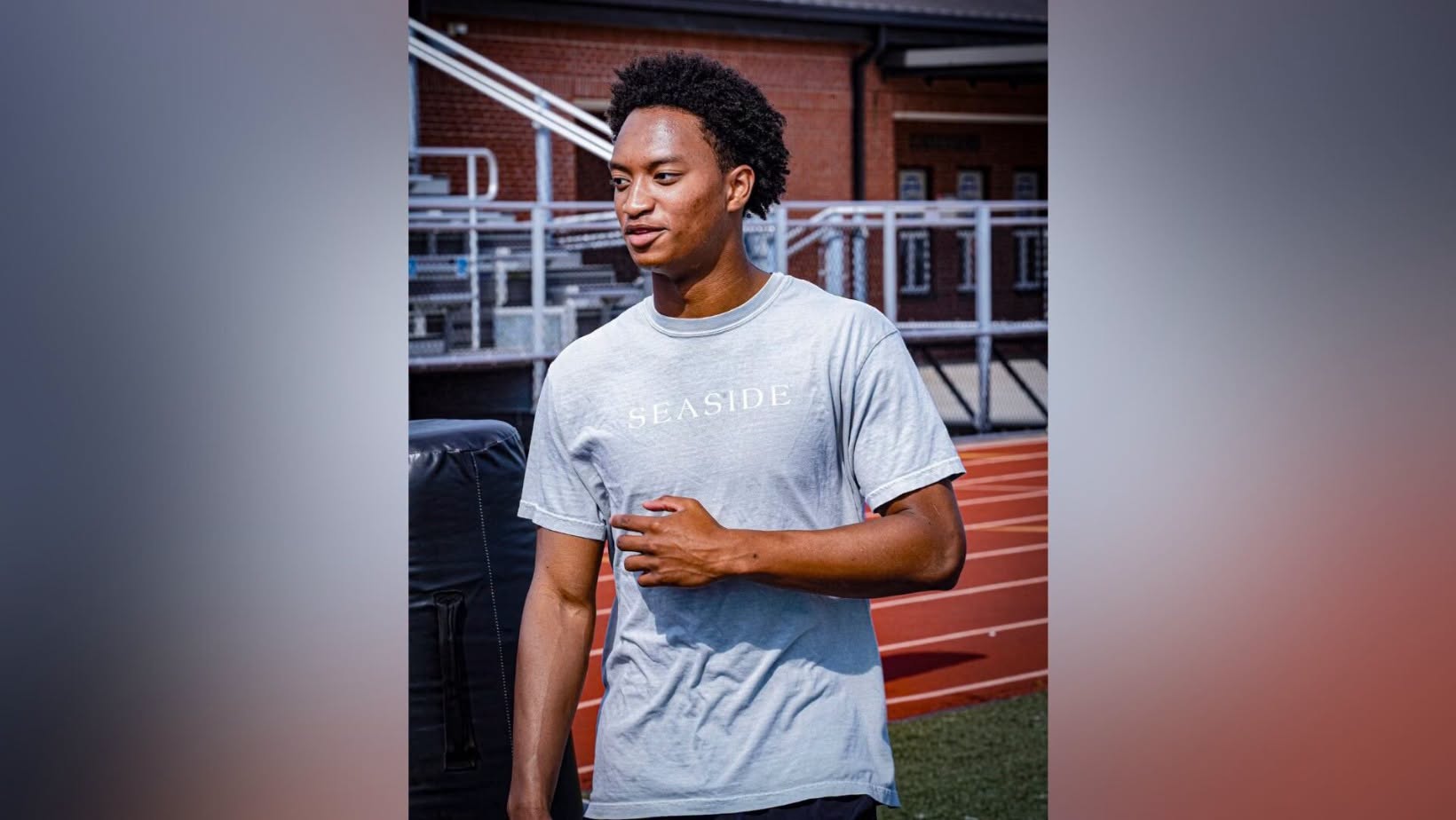
In a tragedy that has rocked the Texas high school football community and left a promising young athlete’s future shattered, 18-year-old Nolan Xavier Wells was found Ꭰҽąէհ on the remote shores of Horn Island, Mississippi, on June 29, 2026. The standout wide receiver for Westlake High School in Austin, Texas—widely regarded as one of the top college prospects in the state—had been reported missing two days earlier during what was supposed to be a celebratory post-graduation fishing and camping trip. Authorities have yet to determine the cause of Ꭰҽąէհ, but the discovery of his body with unexplained injuries has transformed a presumed accidental drowning into a full-scale homicide investigation.
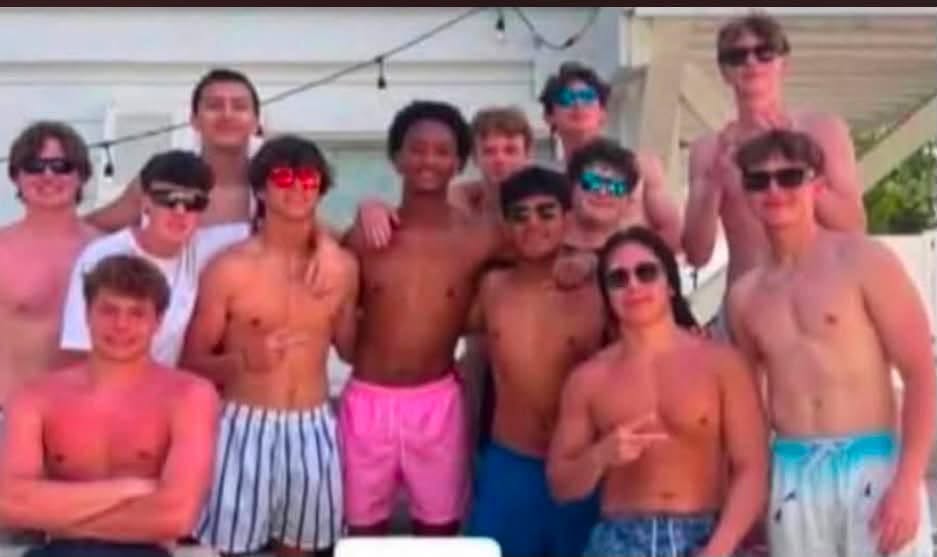
Wells, a 6-foot-2, 195-pound athlete who had already committed to play for the University of Texas Longhorns in the fall, was last seen alive around 9 p.m. on June 27 aboard a chartered boat with five friends and teammates. The group had traveled to the barrier island—part of the Gulf Islands National Seashore—for a weekend of fishing, bonfires, and relaxation before college football camps began. Horn Island, accessible only by boat and known for its pristine but isolated beaches and lack of cell service, is a popular spot for private excursions. According to the surviving friends, Wells stepped away from the campsite to “take a walk along the shoreline” and never returned. A frantic overnight search by the group and local authorities yielded no immediate results.
His body was discovered at dawn on June 29 by a National Park Service ranger conducting a routine patrol. Wells was found partially submerged in shallow water near the western tip of the island, wearing only swim trunks. An initial autopsy revealed no obvious signs of drowning, but investigators noted blunt-force trauma to the back of the head and defensive wounds on his hands and forearms. Toxicology results are pending, though preliminary reports indicate no alcohol or drugs in his system. The Mississippi Bureau of Investigation has taken over the case, classifying it as suspicious and launching a homicide probe.
The circumstances have fueled intense speculation and outrage. Wells’ parents, Marcus and Elena Wells, issued a public statement through their attorney on July 2: “Nolan was a bright, disciplined young man with everything ahead of him. The idea that he simply wandered off and drowned on a calm night defies belief. We demand a full, transparent investigation. Someone knows what happened on that island, and we will not rest until justice is served.” The family has hired a private investigator and offered a $50,000 reward for information leading to an arrest.
Friends who were with Wells that night have been cooperating with police but remain under scrutiny. One teammate, speaking anonymously, told local media: “We were all having a good time. Nolan was laughing, talking about his future at Texas. Then he just… disappeared. We searched for hours. It doesn’t make sense.” Authorities have not ruled out foul play, citing the remote location, the group’s exclusive access to the island that weekend, and inconsistencies in initial statements. Surveillance footage from the boat rental company and cell phone records are being analyzed.
The case has highlighted safety concerns for young athletes on remote outings. Horn Island sees thousands of visitors annually, yet its isolation—limited ranger presence, no emergency services, and treacherous currents—makes it a high-risk destination for unsupervised teens. The National Park Service has temporarily restricted private charters to the island pending the investigation. Meanwhile, the University of Texas has expressed condolences and confirmed Wells’ scholarship offer would have remained valid had he lived.
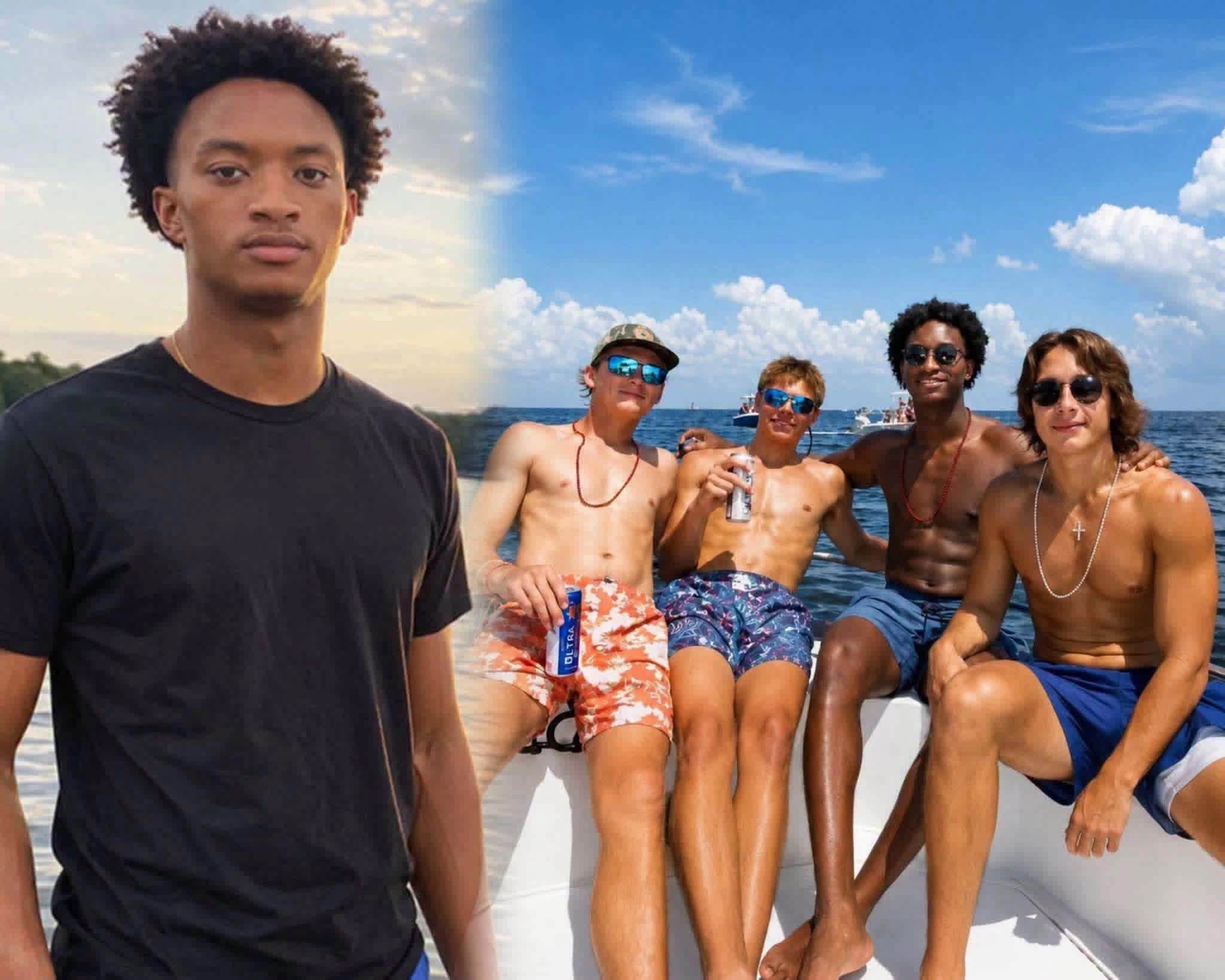
As the probe enters its second week, the football world mourns a rising star whose speed, hands, and leadership made him a household name in Texas recruiting circles. Tributes have poured in from coaches, teammates, and fans, with JusticeForNolan trending on social media. The Wells family’s insistence on answers underscores a painful truth: even the most promising lives can end in darkness when the truth remains hidden.
This tragedy demands accountability. Whether Nolan’s death was a tragic accident, a drunken mishap, or something far more sinister, the investigation must be exhaustive. An 18-year-old with the world at his feet deserves more than speculation. The waters of Horn Island have claimed a future NFL prospect; now the justice system must deliver clarity—and closure—for a family and a community left reeling.
💔 STELLA PARTON BREAKS HER SILENCE — What She Said About Dolly’s Health Has Fans Looking Back
Dolly Parton’s Sister Breaks Silence What Really Happened - GMT - G1
Stella Parton was born May 4, 1949, the sixth of twelve children raised by Robert Lee and Avie Lee Parton in Sevierville, Tennessee — a household defined by noise, limited money, and almost no privacy, the kind of environment that produced strong, determined personalities.
Stella was one of them.
By seven, she was appearing alongside her older sister Dolly on a Knoxville television program; by her teens, she was writing her own songs, though marriage and motherhood pulled music to the margins of her life for a stretch.
The dream never fully disappeared.
In 1967, she recorded a gospel album with her mother and sisters, and later worked clubs in Washington, D.C., before founding her own record label in 1975 and releasing “I Want to Hold You in My Dreams Tonight,” which climbed to number nine on the country charts.
Long before any of that commercial success, Stella had already shown a willingness to take positions others avoided.
At 26, amid backlash against Australian singer Olivia Newton-John for winning recognition in country music, Stella recorded “Ode to Olivia” in her defense — a stand that offered her no career benefit and real risk of criticism, but one she took anyway simply because she believed staying silent was the wrong choice.
That instinct defined the rest of her career: hits like “The Danger of a Stranger” and “Steady as the Rain” (written by Dolly) built a genuine, independent following, including in the U.K., while Stella also worked in New York theater and spoke openly, often controversially, about poverty, domestic violence, and the treatment of women in the music industry.
She was named the Christian Country Music Association’s Female Vocalist of the Year in 2004.
Through all of it, she remained defined publicly, more often than not, as simply “Dolly’s little sister” — a label she spent five decades quietly proving didn’t tell the full story.
That same directness is why her comments in the fall of 2025 carried real weight.
Stella had never positioned herself as the family’s image manager or spokesperson; she was, by reputation, someone who believed difficult truths shouldn’t stay hidden indefinitely.
What she described wasn’t dramatic or accusatory — it was a portrait of a woman who had spent years prioritizing everyone else’s needs over her own.
The context mattered.
Carl Dean, Dolly’s husband of nearly sixty years, died in March 2025 at 82, after a long illness during which Dolly had devoted herself almost entirely to his care.
She later acknowledged that in the process, she’d neglected her own health significantly.
The loss reverberated through the whole extended family — the Partons had lost three brothers in the years surrounding this period, compounding grief that, for a family that had once crowded twelve children into a single small home, meant losing pieces of a shared childhood one after another.
Stella herself went seven years without releasing new music during this stretch, later describing the period simply as one shaped by sorrow, while still speaking about the importance of finding moments of laughter within it.
Looking back, one moment reads very differently in hindsight than it did at the time: in late September 2025, Dolly postponed her planned Las Vegas residency, citing health challenges — a rare cancellation for a performer whose six-decade career had included very few of them.
At the time, most fans treated it as a minor, temporary setback.
Stella’s later reflections suggested the signs had actually been building for some time, visible to family in ways the public smile made easy to miss.
That concern crystallized publicly not long after, when Dolly’s younger sister Frieda posted a simple request on Facebook asking fans to pray for Dolly.
What looked at first like an ordinary, well-meaning gesture spread rapidly, sparking widespread speculation about how serious Dolly’s condition actually was.
Dolly herself responded directly within days, appearing in a video from a Grand Ole Opry commercial shoot, insisting with her familiar humor that she wasn’t finished yet — the now widely remembered “I ain’t dead yet” moment that briefly quieted public concern.
In the months that followed, the pattern repeated: reassuring updates about kidney stones, dehydration, and treatment, paired with continued work on new projects, right up until Dolly Parton’s death on August 25, 2026, at 80.
Looking back across that full timeline — the postponed residency, the family’s public worry, Stella’s own account of a sister who consistently deprioritized her own wellbeing — it becomes easier to see what the people closest to Dolly understood well before the rest of the world did: that the warmth and resilience the public saw every time she appeared on camera came at a real, largely invisible cost.