What exactly was the lone holdout juror in Lindsay Clancy’s triple-murder trial thinking?
The juror himself has not spoken, but several other jurors said the holdout acknowledged he had doubts about the prosecution’s case but still declined to find Clancy not guilty by lack of criminal responsibility. At least one juror said the holdout was unable to cite evidence or testimony that helped prove what he was saying.
“He had the hardest time getting off the fact that Lindsay viciously killed her children,” one juror told NBC10 Boston.
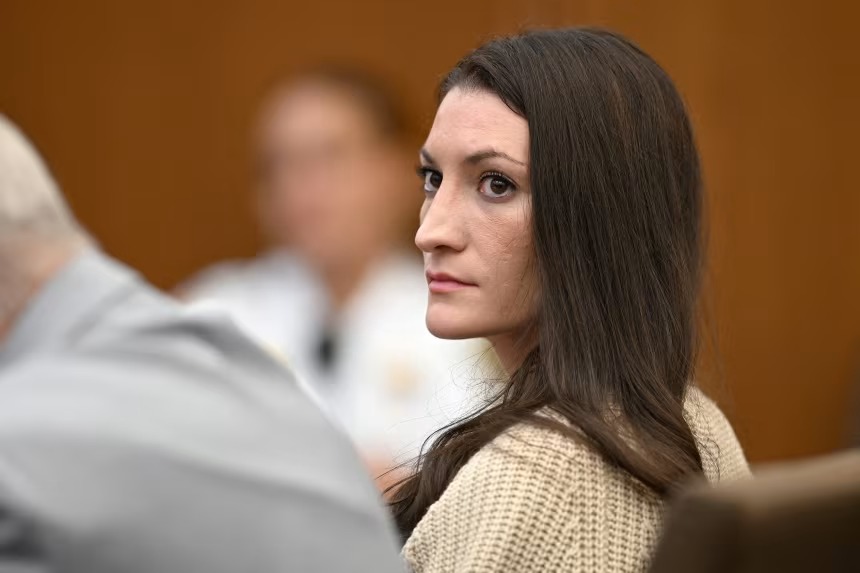
Lindsay Clancy’s trial was the latest case in the long, quixotic history of the insanity defense.
Those who have studied the so-called “insanity defense” say the holdout juror’s apparent position is not uncommon: Many people struggle or refuse to accept an insanity plea as a legitimate defense.
“There are people who in their heart believe there’s never any reasonable explanation that does not require punishment for somebody who murders their children,” said Dr. Joni Johnston, a forensic psychologist.
“It’s a natural inclination for people, reasonable people, to want to hold people responsible for what they do,” said Gary Galperin, a former prosecutor with a focus on forensic psychiatry and psychology. “Our system of criminal justice is premised on convicting and holding people liable if they engage in wrongdoing.”
Their analysis adds further insight into the cause of the mistrial for Clancy, the 36-year-old former labor and delivery nurse whose murder trial sparked emotional views online and over kitchen tables about the line between mєntal health and personal responsibility.
Clancy has admitted she fatally strangled her three young children and attempted sᩚuᩚiᩚcide at their Mᴀssachusetts home in January 2023, but at trial her defense argued she was not “criminally responsible” because she was suffering from postpartum psychosis, a rare form of mєntal illness.
If she had been found not guilty by lack of criminal responsibility, Clancy likely would have been committed to a psychiatric facility for an undetermined length of time.
Despite the mistrial, defense attorney Kevin Reddington claimed victory afterward and initially criticized the holdout juror’s position. Prosecutors have not yet said whether they plan to put Clancy on trial again.
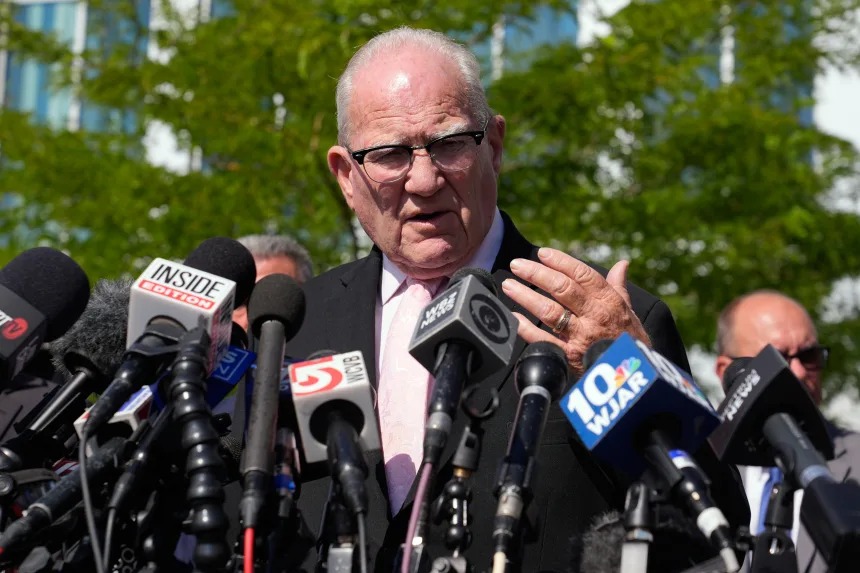
Defense attorney Kevin Reddington has a history of representing clients who argue they were insane at the time of their offense.
Still, the holdout juror’s position hints at the broader skepticism of the insanity defense and offers a check on Reddington’s confidence. While the American public’s understanding of mєntal illness has come a long way, it remains difficult to convince all 12 members of a jury a person should not be held responsible for their own actions.
“This is a really good case study, if you will, in the insanity defense,” Galperin said. “What it takes to prevail in an insanity case and the strong emotions that exist on either side, especially when you’re dealing with such horrific facts as this.”
The insanity defense in America
The insanity defense dates to the common law that underpins the American judicial system.
The defense was first formalized in an 1843 case against Daniel M’Naghten, who was found not guilty “by reason of insanity” by a jury after fatally shooting the secretary to the British Prime Minister, according to Cornell Law School’s Legal Information Insтιтute.
The M’Naghten Rules set the modern standard, finding that insanity exists if a person can prove they did not know what they were doing or did not know what they were doing was wrong.
This standard has been updated a bit in the 183 years since, and each state has its own definition and standard for criminal insanity.
In Mᴀssachusetts, the law sets out a definition of criminal responsibility and mєntal illness.
“A person is not criminally responsible for her conduct if she has a mєntal disease or defect and as a result of that mєntal disease or defect, lacks the substantial capacity either to appreciate the criminality or the wrongfulness of her conduct or to conform her conduct to the requirements of the law,” Judge William Sullivan told the jury at Clancy’s trial.
Further, if a defendant raises mєntal illness concerns in Mᴀssachusetts, the burden is on prosecutors to prove beyond a reasonable doubt the defendant was criminally responsible at the time. By contrast, many other states put the burden on the defendant to prove insanity.
Perhaps the most well-known use of the insanity defense was in the trial of John Hinckley Jr., the man who sH๏τ President Ronald Reagan and three others in 1981 in what he said was a delusional attempt to impress the actress Jodie Foster. The jury found him not guilty by reason of insanity. Hinckley spent nearly 30 years at a mєntal hospital before his release in 2016.
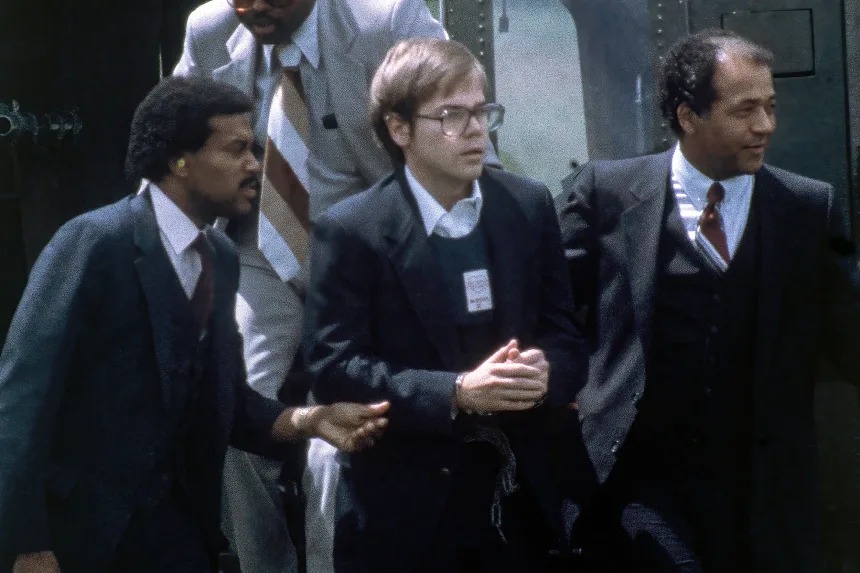
John Hinckley Jr., who sH๏τ and wounded President Ronald Reagan in 1981, was found not guilty by reason of insanity at trial.
The jury’s decision in Hinckley’s trial spurred a backlash against the insanity defense. Since then, a number of states have severely restricted or even abolished the insanity defense, a practice the US Supreme Court upheld in 2020.
That 6-3 court decision, Kahler v. Kansas, acknowledged that views on mєntal illness and criminal responsibility are controversial, uncertain and ever-changing.
“Defining the precise relationship between criminal culpability and mєntal illness involves examining the workings of the brain, the purposes of the criminal law, the ideas of free will and responsibility,” Justice Elena Kagan wrote for the majority.
“It is a project demanding hard choices among values, in a context replete with uncertainty, even at a single moment in time. And it is a project, if any is, that should be open to revision over time, as new medical knowledge emerges and as legal and moral norms evolve,” Kagan wrote.
Why jurors are skeptical
Reddington, Clancy’s defense attorney, knows well the challenges of the insanity defense and its evolution over time.
In a landmark 1989 case, Reddington successfully argued Therese Rogers was temporarily insane when she fatally stabbed her abusive husband. That was one of the first instances of what was then known as “battered woman syndrome.”
But in other cases jurors have been more skeptical of his arguments. In 2002, Reddington represented Michael McDermott, the man who carried out a workplace śh́óóting in Wakefield, Mᴀssachusetts. He said McDermott was insane at the time and compared him to Jack Nicholson’s character in “The Shining.” The jury found McDermott guilty of seven counts of first-degree murder.
In Clancy’s case, Reddington has expressed confidence in a potential retrial, and the 11 to 1 jury split indicates the case nearly ended with an acquittal.
“If they tried the trial again the way they did, nine times out of 10, I think a jury would come back with not guilty by reason of insanity,” one juror told ABC News. “No doubt in my mind.”
But others are more skeptical.
Overall, people often perceive the insanity defense as a “get-out-of-jail-free card,” but it’s rarely used and even more rarely successful, said Johnston, the forensic psychologist. In a similar vein, Galperin, the former prosecutor, often says an insanity defense is a “defense of last resort.”
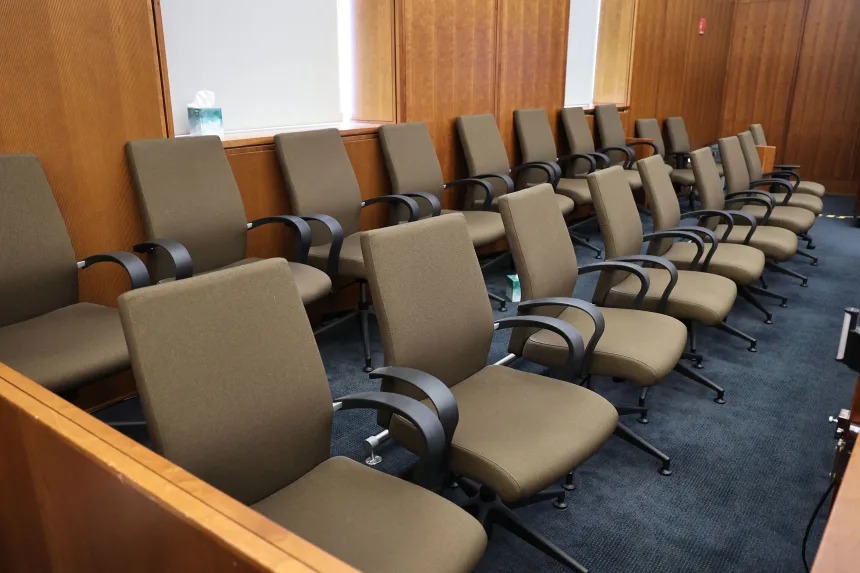
Jurors in Lindsay Clancy’s trial could not come to a unanimous verdict. Would another group of jurors in a retrial be different?
Clancy’s trial has put a renewed spotlight on the mєntal health system and particularly on maternal mєntal health. It’s possible a future jury would be more familiar and informed about these issues because of this trial’s publicity.
Still, there remains a stigma around mєntal health and a skepticism of its role in people’s decision-making. Even in Clancy’s trial, expert psychiatrists for the prosecution and the defense disagreed on Clancy’s mєntal state at the time of the killings.
“People don’t understand mєntal illness,” said Margaret McLean, a former prosecutor who closely followed the trial. “It’s a society where we believe in crime and punishment. Somebody commits a crime, they should be punished for it appropriately. The insanity defense goes into a gray area of, What is mєntal illness? Do we really understand – what is psychosis?”
Ultimately, the majority of Clancy’s jury believed she didn’t receive adequate mєntal health treatment and thought a verdict of not guilty by lack of criminal responsibility would lead to her “getting the help she needs,” juror Paula Devlin told “CBS Mornings.”
“Everybody wants justice for the children. Those children never left that room. They’ve never left our heart. And that was a way to get justice for those children,” Devlin said Friday. “This wouldn’t have happened if Lindsay didn’t get lost in the system and failed by the system.”
In the end, any retrial would have a new set of jurors but would still have to deal with the challenges that are part and parcel of the insanity defense.
“The insanity plea polarizes many people,” Johnston said. “You take that, along with misconceptions about the spirit of it and the letter of it, and it’s not that surprising that you would have one person who just could not get over that hurdle.”
💔 STELLA PARTON BREAKS HER SILENCE — What She Said About Dolly’s Health Has Fans Looking Back
Dolly Parton’s Sister Breaks Silence What Really Happened - GMT - G1
Stella Parton was born May 4, 1949, the sixth of twelve children raised by Robert Lee and Avie Lee Parton in Sevierville, Tennessee — a household defined by noise, limited money, and almost no privacy, the kind of environment that produced strong, determined personalities.
Stella was one of them.
By seven, she was appearing alongside her older sister Dolly on a Knoxville television program; by her teens, she was writing her own songs, though marriage and motherhood pulled music to the margins of her life for a stretch.
The dream never fully disappeared.

In 1967, she recorded a gospel album with her mother and sisters, and later worked clubs in Washington, D.C., before founding her own record label in 1975 and releasing “I Want to Hold You in My Dreams Tonight,” which climbed to number nine on the country charts.
Long before any of that commercial success, Stella had already shown a willingness to take positions others avoided.
At 26, amid backlash against Australian singer Olivia Newton-John for winning recognition in country music, Stella recorded “Ode to Olivia” in her defense — a stand that offered her no career benefit and real risk of criticism, but one she took anyway simply because she believed staying silent was the wrong choice.
That instinct defined the rest of her career: hits like “The Danger of a Stranger” and “Steady as the Rain” (written by Dolly) built a genuine, independent following, including in the U.K., while Stella also worked in New York theater and spoke openly, often controversially, about poverty, domestic violence, and the treatment of women in the music industry.
She was named the Christian Country Music Association’s Female Vocalist of the Year in 2004.
Through all of it, she remained defined publicly, more often than not, as simply “Dolly’s little sister” — a label she spent five decades quietly proving didn’t tell the full story.
That same directness is why her comments in the fall of 2025 carried real weight.
Stella had never positioned herself as the family’s image manager or spokesperson; she was, by reputation, someone who believed difficult truths shouldn’t stay hidden indefinitely.
What she described wasn’t dramatic or accusatory — it was a portrait of a woman who had spent years prioritizing everyone else’s needs over her own.
The context mattered.
Carl Dean, Dolly’s husband of nearly sixty years, died in March 2025 at 82, after a long illness during which Dolly had devoted herself almost entirely to his care.
She later acknowledged that in the process, she’d neglected her own health significantly.
The loss reverberated through the whole extended family — the Partons had lost three brothers in the years surrounding this period, compounding grief that, for a family that had once crowded twelve children into a single small home, meant losing pieces of a shared childhood one after another.
Stella herself went seven years without releasing new music during this stretch, later describing the period simply as one shaped by sorrow, while still speaking about the importance of finding moments of laughter within it.
Looking back, one moment reads very differently in hindsight than it did at the time: in late September 2025, Dolly postponed her planned Las Vegas residency, citing health challenges — a rare cancellation for a performer whose six-decade career had included very few of them.
At the time, most fans treated it as a minor, temporary setback.
Stella’s later reflections suggested the signs had actually been building for some time, visible to family in ways the public smile made easy to miss.
That concern crystallized publicly not long after, when Dolly’s younger sister Frieda posted a simple request on Facebook asking fans to pray for Dolly.
What looked at first like an ordinary, well-meaning gesture spread rapidly, sparking widespread speculation about how serious Dolly’s condition actually was.
Dolly herself responded directly within days, appearing in a video from a Grand Ole Opry commercial shoot, insisting with her familiar humor that she wasn’t finished yet — the now widely remembered “I ain’t dead yet” moment that briefly quieted public concern.
In the months that followed, the pattern repeated: reassuring updates about kidney stones, dehydration, and treatment, paired with continued work on new projects, right up until Dolly Parton’s death on August 25, 2026, at 80.
Looking back across that full timeline — the postponed residency, the family’s public worry, Stella’s own account of a sister who consistently deprioritized her own wellbeing — it becomes easier to see what the people closest to Dolly understood well before the rest of the world did: that the warmth and resilience the public saw every time she appeared on camera came at a real, largely invisible cost.