Father Patricio Sánchez Molinari: The Redemptorist Priest Killed by a Falling Crucifix During Livestreamed Mᴀss
A sudden tragedy in Ecuador has left a Catholic community grieving the loss of a priest whose death unfolded during a sacred service broadcast online.
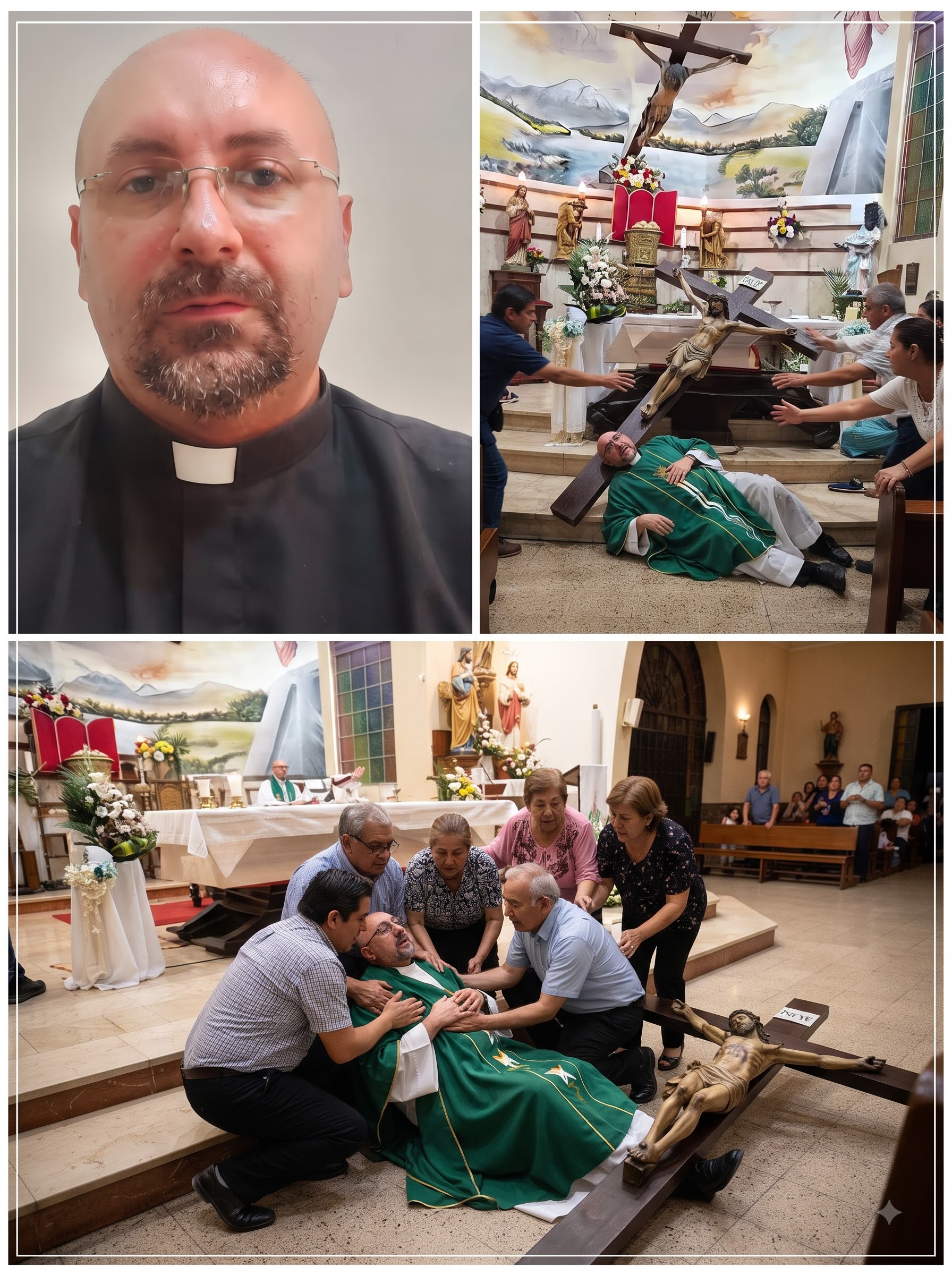
GUAYAQUIL, Ecuador — A Catholic community in Ecuador is mourning the death of Father Patricio Alfredo Sánchez Molinari, a 53-year-old Redemptorist priest who was fatally struck by a large wooden crucifix while celebrating Mᴀss on October 17, 2026.
The tragedy occurred at the Church of Our Lady of Perpetual Help, also known as Nuestra Señora del Perpetuo Socorro, in Guayaquil, Ecuador’s largest city. The service was being livestreamed when the heavy crucifix mounted behind the altar suddenly fell forward, striking the priest on the head.
What began as a religious gathering became an emergency in seconds. Congregants could be heard crying out for help as people rushed toward the altar. The incident was captured on the livestream, and footage subsequently circulated widely on social media, bringing international attention to the priest’s sudden death. [Source: OSV News and CBS News.]
A priest remembered by the Church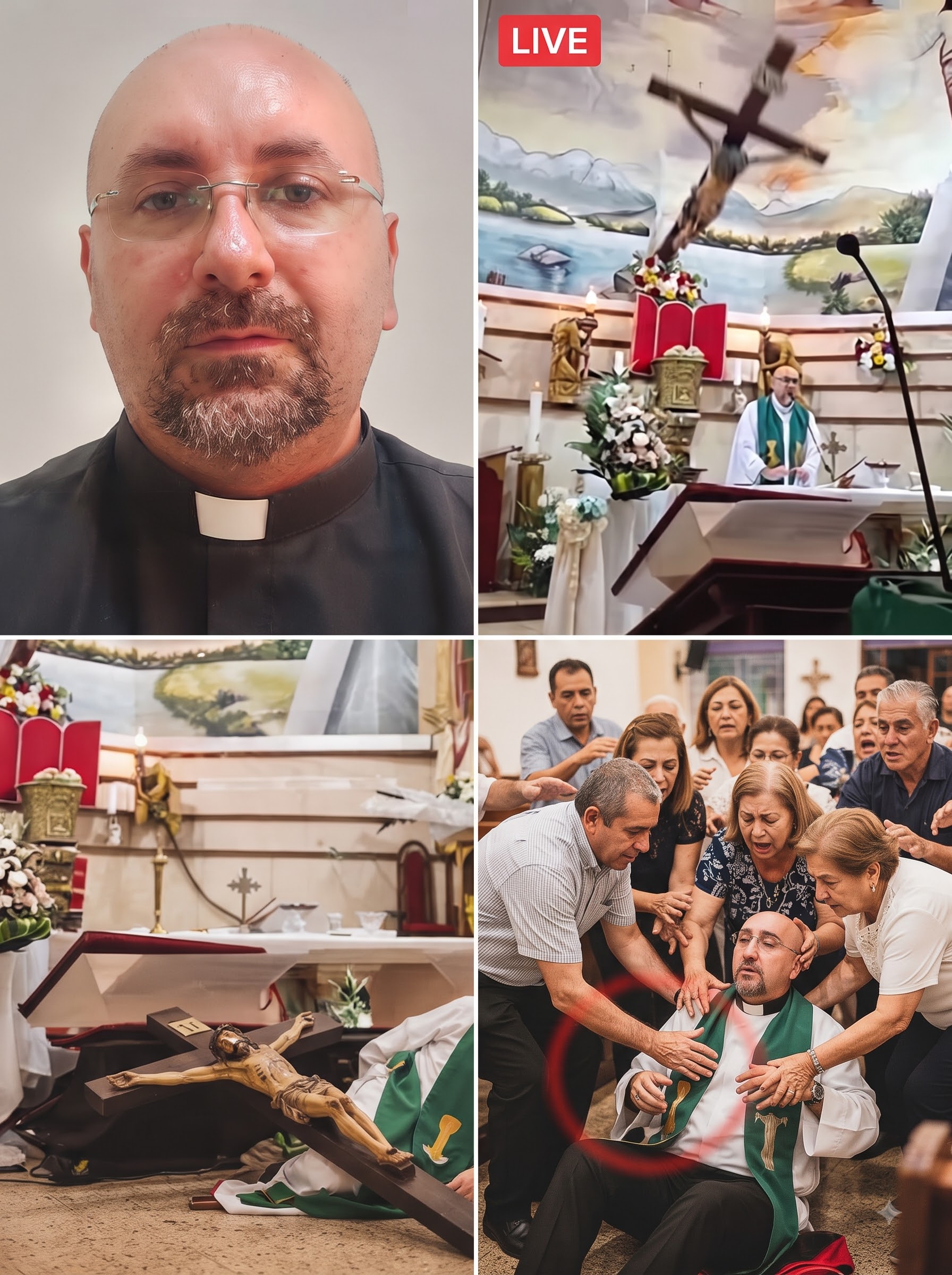
Father Sánchez Molinari’s death was confirmed by the Archdiocese of Guayaquil, which issued a statement expressing sorrow and offering prayers for his eternal rest.
The archdiocese described the priest as having departed for the Father’s House to rejoice in His presence and glory. It also expressed solidarity, affection and support for the Redemptorist community, his family and his friends.
The statement offered a spiritual message of remembrance at a moment when parishioners and fellow clergy were confronting the loss of a priest whose life had been dedicated to the Catholic Church.
Father Sánchez Molinari served as parish priest at Our Lady of Perpetual Help Church in Guayaquil. His death also prompted expressions of mourning from the wider Redemptorist community, whose members share a religious tradition centered on missionary work, preaching and service.
A memorial Mᴀss was celebrated at the church on October 18, bringing the community together to pray for the deceased priest. The gathering offered an opportunity for Catholics to honor his memory and stand alongside those most directly affected by the tragedy.
The religious order behind his vocation
Father Sánchez Molinari belonged to the Congregation of the Most Holy Redeemer, commonly known as the Redemptorists.
Founded on November 9, 1732, in Scala, in what was then the Kingdom of Naples, the congregation was established by St. Alphonsus Maria de Liguori. Its original mission focused particularly on bringing the Gospel to poor and underserved communities.
The congregation later received formal papal approval from Pope Benedict XIV on February 25, 1749. Over the centuries, its missionary work expanded beyond Italy into Europe, the Americas and other parts of the world.
Today, the Redemptorists maintain an international presence, serving communities across multiple continents. The congregation’s missionary tradition emphasizes preaching, pastoral ministry and reaching people who may otherwise have limited access to religious support.
That history provides important context for understanding Father Sánchez Molinari’s place within the Catholic Church. He was not simply a priest serving a single congregation; he was also a member of a religious family with nearly three centuries of missionary history.
For fellow Redemptorists, his death represents the loss of a member of that shared vocation. For parishioners, it means mourning the priest who served their local faith community.
A livestream captured the moment everything changed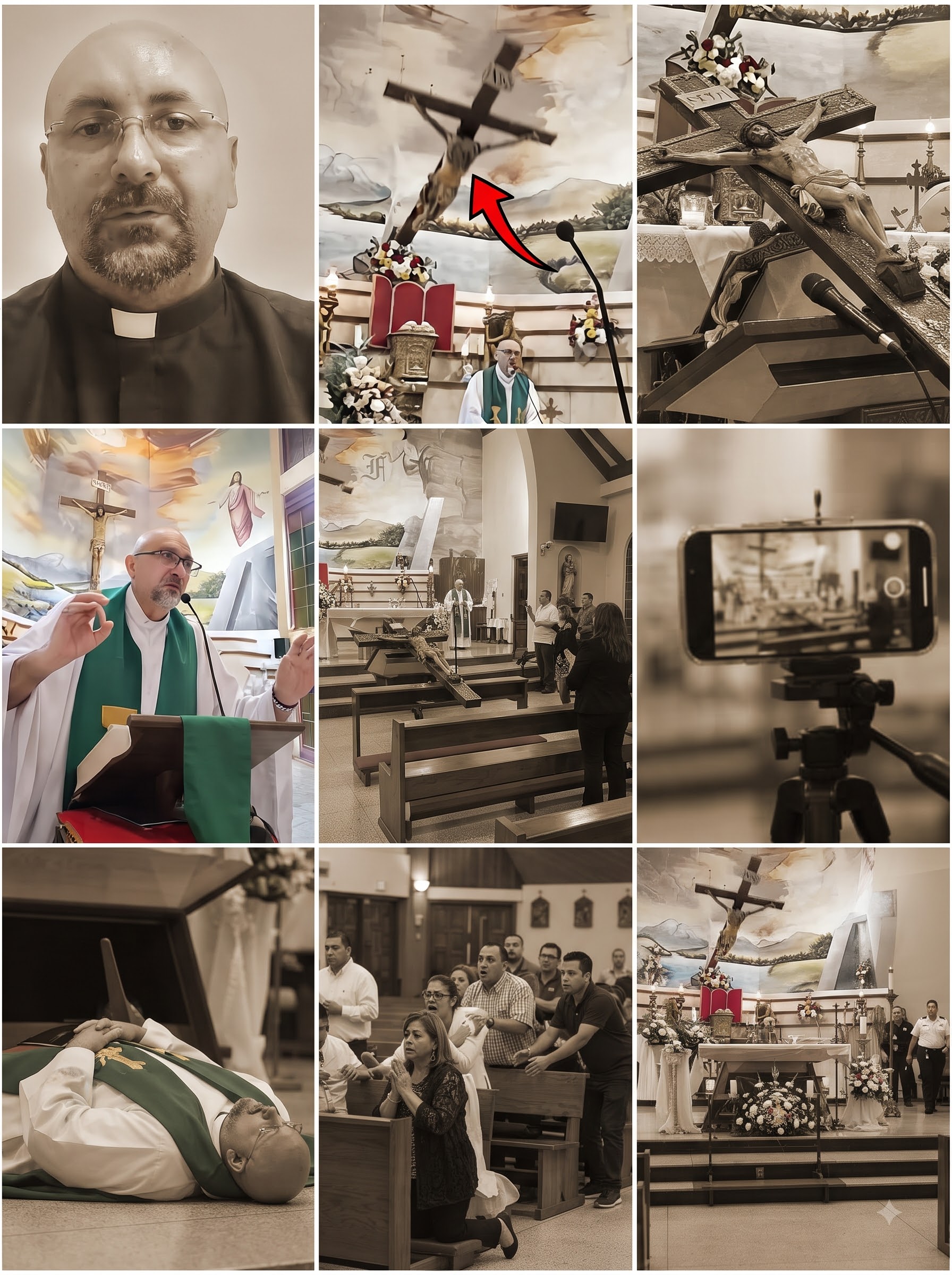
According to reports reviewed by multiple news organizations, Father Sánchez Molinari was standing behind the altar, facing the congregation, when the large crucifix mounted on the wall behind him fell forward.
The priest did not appear to see the object falling before it struck him. He collapsed out of view, while frightened worshippers reacted immediately.
Voices from the congregation called for help, including a plea for someone to summon an ambulance. People rushed toward the priest as the emergency unfolded.
The livestream made the incident particularly distressing because people watching remotely could witness the sudden change from an ordinary religious service to a desperate attempt to help the priest.
The footage later spread online, drawing attention far beyond Guayaquil. However, the circulation of such material also raises a question of sensitivity: the recording documents a real person’s final moments and a traumatic experience for those present.
Remembering Father Sánchez Molinari does not require repeatedly viewing or sharing the most distressing images. The more meaningful focus is the life of the priest, the community grieving him and the circumstances that remain to be clarified.
What caused the crucifix to fall?
As of October 20, 2026, reports have not established why the heavy wooden crucifix became detached from the wall.
It remains unclear whether the incident involved a mounting failure, a structural problem or another cause. No verified conclusion should be drawn without the findings of an appropriate investigation.
The distinction matters. The livestream provides a record of what happened, but the footage alone cannot establish why the crucifix fell or whether any individual or organization was responsible.
Local authorities had not publicly provided a detailed explanation in the reports available at the time of publication. Further information about the church’s fixtures and the circumstances of the accident would be needed to establish what led to the tragedy.
For the parish community, those unanswered questions exist alongside the immediate work of grieving and supporting one another.
A tragedy during a sacred moment
For Catholics, a crucifix is a central symbol of the Christian faith, representing the suffering and death of Jesus Christ. Its presence behind an altar is intended to direct attention toward the meaning of the Mᴀss and the foundations of Christian belief.
The circumstances of Father Sánchez Molinari’s death therefore carry a particular emotional weight for many believers. An object ᴀssociated with worship and devotion became the source of a fatal accident during a service.
Yet the tragedy should not be treated as evidence of a supernatural explanation or as a reason to speculate about divine intent. The available reporting describes a fatal physical accident, while the cause of the crucifix’s fall remains unknown.
The appropriate response is to recognize the human loss and allow the facts to emerge through reliable reporting and any relevant investigation.
The community left to mourn
The death of a priest affects more than the person’s immediate family. It can also leave parishioners, fellow clergy and people who relied on his pastoral presence facing a sudden absence in their religious lives.
The Archdiocese of Guayaquil’s statement acknowledged the Redemptorist community, Father Sánchez Molinari’s family and his friends, reflecting the breadth of those affected by the loss.
The memorial Mᴀss held the following day provided a setting for prayer and remembrance. Such gatherings are an important part of how religious communities respond to death: by honoring the person who has died, supporting those who grieve and reaffirming the bonds that unite them.
As tributes continue, Father Sánchez Molinari’s idenтιтy as a priest and Redemptorist remains central to his remembrance. His death has drawn worldwide attention because of the extraordinary circumstances in which it occurred, but his life should not be reduced to the footage that captured his final moments.
Questions remain after Father Sánchez Molinari’s death
The confirmed facts establish that Father Patricio Alfredo Sánchez Molinari died on October 17 after a large crucifix fell on him during a livestreamed Mᴀss in Guayaquil. The Archdiocese of Guayaquil confirmed his death, and members of the Catholic community gathered to pray for him.
What remains unresolved is the reason the crucifix fell and whether any further findings will clarify the circumstances of the accident.
For now, a community is left to mourn a priest who served within a worldwide religious congregation founded nearly 300 years ago.
Beyond the viral footage and the shock of the incident, the story is ultimately about a human life lost during a moment of worship — and the people who must now find a way to grieve, remember and move forward.
💔 STELLA PARTON BREAKS HER SILENCE — What She Said About Dolly’s Health Has Fans Looking Back
Dolly Parton’s Sister Breaks Silence What Really Happened - GMT - G1
Stella Parton was born May 4, 1949, the sixth of twelve children raised by Robert Lee and Avie Lee Parton in Sevierville, Tennessee — a household defined by noise, limited money, and almost no privacy, the kind of environment that produced strong, determined personalities.
Stella was one of them.
By seven, she was appearing alongside her older sister Dolly on a Knoxville television program; by her teens, she was writing her own songs, though marriage and motherhood pulled music to the margins of her life for a stretch.
The dream never fully disappeared.

In 1967, she recorded a gospel album with her mother and sisters, and later worked clubs in Washington, D.C., before founding her own record label in 1975 and releasing “I Want to Hold You in My Dreams Tonight,” which climbed to number nine on the country charts.
Long before any of that commercial success, Stella had already shown a willingness to take positions others avoided.
At 26, amid backlash against Australian singer Olivia Newton-John for winning recognition in country music, Stella recorded “Ode to Olivia” in her defense — a stand that offered her no career benefit and real risk of criticism, but one she took anyway simply because she believed staying silent was the wrong choice.
That instinct defined the rest of her career: hits like “The Danger of a Stranger” and “Steady as the Rain” (written by Dolly) built a genuine, independent following, including in the U.K., while Stella also worked in New York theater and spoke openly, often controversially, about poverty, domestic violence, and the treatment of women in the music industry.
She was named the Christian Country Music Association’s Female Vocalist of the Year in 2004.
Through all of it, she remained defined publicly, more often than not, as simply “Dolly’s little sister” — a label she spent five decades quietly proving didn’t tell the full story.
That same directness is why her comments in the fall of 2025 carried real weight.
Stella had never positioned herself as the family’s image manager or spokesperson; she was, by reputation, someone who believed difficult truths shouldn’t stay hidden indefinitely.
What she described wasn’t dramatic or accusatory — it was a portrait of a woman who had spent years prioritizing everyone else’s needs over her own.
The context mattered.
Carl Dean, Dolly’s husband of nearly sixty years, died in March 2025 at 82, after a long illness during which Dolly had devoted herself almost entirely to his care.
She later acknowledged that in the process, she’d neglected her own health significantly.
The loss reverberated through the whole extended family — the Partons had lost three brothers in the years surrounding this period, compounding grief that, for a family that had once crowded twelve children into a single small home, meant losing pieces of a shared childhood one after another.
Stella herself went seven years without releasing new music during this stretch, later describing the period simply as one shaped by sorrow, while still speaking about the importance of finding moments of laughter within it.
Looking back, one moment reads very differently in hindsight than it did at the time: in late September 2025, Dolly postponed her planned Las Vegas residency, citing health challenges — a rare cancellation for a performer whose six-decade career had included very few of them.
At the time, most fans treated it as a minor, temporary setback.
Stella’s later reflections suggested the signs had actually been building for some time, visible to family in ways the public smile made easy to miss.
That concern crystallized publicly not long after, when Dolly’s younger sister Frieda posted a simple request on Facebook asking fans to pray for Dolly.
What looked at first like an ordinary, well-meaning gesture spread rapidly, sparking widespread speculation about how serious Dolly’s condition actually was.
Dolly herself responded directly within days, appearing in a video from a Grand Ole Opry commercial shoot, insisting with her familiar humor that she wasn’t finished yet — the now widely remembered “I ain’t dead yet” moment that briefly quieted public concern.
In the months that followed, the pattern repeated: reassuring updates about kidney stones, dehydration, and treatment, paired with continued work on new projects, right up until Dolly Parton’s death on August 25, 2026, at 80.
Looking back across that full timeline — the postponed residency, the family’s public worry, Stella’s own account of a sister who consistently deprioritized her own wellbeing — it becomes easier to see what the people closest to Dolly understood well before the rest of the world did: that the warmth and resilience the public saw every time she appeared on camera came at a real, largely invisible cost.