With less than two weeks remaining before her scheduled execution, Christa Gail Pike—the only woman currently on Tennessee’s death row—is making a deeply personal request through her attorneys: if the state carries out her death sentence, she wants only female staff to physically handle her during the execution process. Pike, now 50, is scheduled to be executed at 10 a.m. CDT on September 30, 2026, at Riverbend Maximum Security Insтιтution in Nashville. Tennessee officials are continuing preparations for that date, although ongoing litigation and a clemency request could still affect whether the execution proceeds as scheduled.
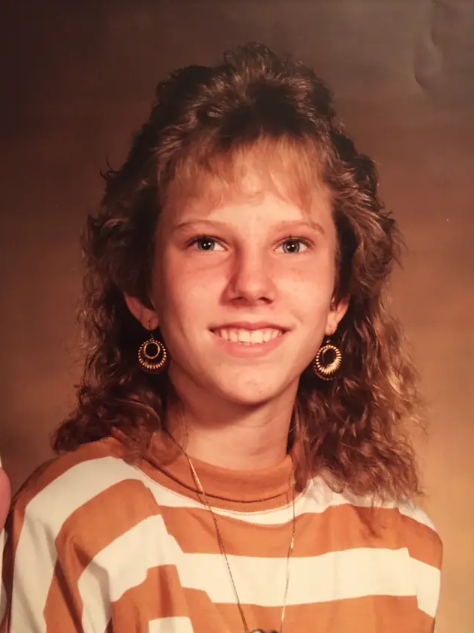
The request for female staff is tied to Pike’s reported history of childhood Sєxual abuse. Her current legal team says she experienced severe instability, neglect and abuse while growing up in West Virginia, including Sєxual ᴀssaults beginning when she was a child. Her attorneys argue that being strapped to an execution gurney and physically handled by male staff while intravenous lines are inserted could trigger traumatic memories. They have therefore asked Tennessee officials to ensure that women perform the procedures requiring physical contact with her. As of the latest reporting, the state had not publicly guaranteed that the request would be granted.
The unusual request has brought renewed attention to Pike’s background, but it has also returned attention to the reason she has spent three decades under a death sentence: the January 1995 murder of 19-year-old Colleen Slemmer.
Pike was 18 and attending the Job Corps Center in Knoxville, Tennessee, when she became involved with 17-year-old Tadaryl Shipp. According to the Tennessee Supreme Court record, Pike had developed hostility toward fellow Job Corps student Colleen Slemmer. Prosecutors presented evidence that Pike believed Slemmer was interested in Shipp, although the case record reflected additional tension between the two young women. On January 11, 1995, another student testified that Pike said she intended to kill Slemmer.
The following evening, January 12, Pike, Shipp, Slemmer and another Job Corps student, Shadolla Peterson, left the center together. Pike told Slemmer they were going elsewhere and eventually led her toward an isolated location on the University of Tennessee agricultural campus. What followed was a prolonged ᴀssault that the Tennessee Supreme Court later described in extensive detail.
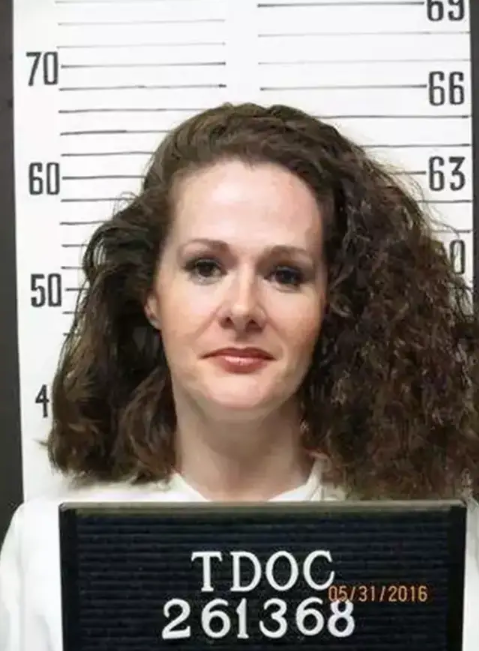
Slemmer was beaten, cut and repeatedly prevented from escaping. According to Pike’s own statement to investigators, Slemmer repeatedly attempted to get away and pleaded to be released. Pike admitted striking and kicking her, cutting her with a box cutter and attacking her after she attempted to flee. Rocks were also used during the ᴀssault. Pike estimated that the episode lasted approximately 30 minutes to an hour. The following morning, a University of Tennessee grounds employee discovered Slemmer’s body near the agricultural campus greenhouses.
One of the most disturbing pieces of evidence emerged almost immediately afterward. Witnesses testified that Pike returned to Job Corps and talked openly about the killing. According to the court record, she showed other students a fragment of bone that she claimed she had taken from Slemmer’s skull as a souvenir. Those statements became significant evidence against her.
Pike later gave investigators a statement acknowledging her involvement but claimed she had originally intended only to fight and frighten Slemmer rather than kill her. Prosecutors argued that the evidence demonstrated premeditation, pointing not only to Pike’s actions during the attack but also to testimony that she had spoken about killing Slemmer the day before.
A Tennessee jury convicted Pike of premeditated first-degree murder and conspiracy to commit first-degree murder. During the penalty phase, jurors found two statutory aggravating circumstances, including that the killing involved torture or serious physical abuse beyond what was necessary to cause death. Pike was sentenced to death for the murder and received a consecutive 25-year sentence for conspiracy. The Tennessee Supreme Court affirmed her convictions and death sentence in 1998.

The other defendants received different punishments. Shipp, who was 17 at the time of the crime, was convicted of first-degree murder and received a life sentence. His age is legally important: subsequent U.S. Supreme Court precedent prohibits capital punishment for crimes committed by people younger than 18. Peterson cooperated with prosecutors and testified in the case rather than receiving a death sentence.
Over the decades, Pike’s case moved through repeated appeals and post-conviction proceedings. At one stage she attempted to abandon further challenges to her sentence, and Tennessee courts concluded that she was competent to make that decision. Later litigation resumed, and her death sentence remained intact.
In September 2025, the Tennessee Supreme Court formally set Pike’s execution for September 30, 2026, unless another court or appropriate authority intervenes. The Tennessee Department of Correction has since proceeded with preparations, including selecting official media witnesses and issuing guidelines for journalists covering the execution at Riverbend Maximum Security Insтιтution.

Pike’s attorneys are now asking Governor Bill Lee to commute her death sentence to life imprisonment without parole. Their clemency argument does not dispute that Pike was responsible for Slemmer’s killing. Instead, it focuses heavily on information about Pike’s childhood, psychological development and mental health that the defense says was not adequately presented to the jury responsible for deciding her punishment.
According to recent reporting on the clemency effort, Pike’s attorneys say she endured severe childhood abuse, including Sєxual violence, instability and neglect. They contend that jurors deciding whether she should receive a death sentence did not hear the full extent of those experiences. The lawyers also point to mental-health diagnoses and argue that Pike’s age—she had only recently turned 18 when Slemmer was killed—should receive greater consideration in light of modern research into adolescent brain development. These are arguments advanced by Pike’s defense team in support of clemency; they do not change the findings of the jury or the Tennessee courts regarding her guilt.
The case therefore contains two very different stories that remain important to distinguish. Colleen Slemmer was a 19-year-old woman subjected to a prolonged and fatal ᴀssault, and Pike was convicted of deliberately participating in her murder. Pike’s own history of alleged abuse is now being presented by her lawyers as mitigation for punishment, not as a legal justification for what happened to Slemmer.
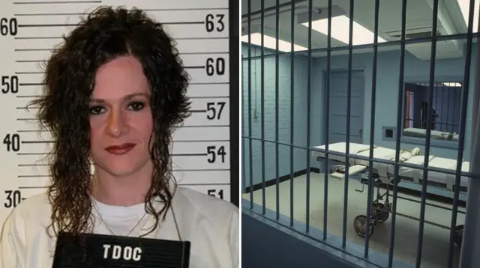
Pike’s attorneys have also challenged aspects of Tennessee’s execution procedures, including the lethal-injection protocol. Those challenges concern the possibility of severe pain during the execution and Pike’s individual medical and psychological circumstances. So far, none has removed the September 30 execution date.
Her request for an all-female team has become one of the most personal elements of those final legal efforts. The concern, according to her lawyers, is that being restrained and touched by male personnel could recreate aspects of earlier Sєxual trauma during the final minutes of her life. They are asking that female correctional or medical personnel handle those procedures instead.
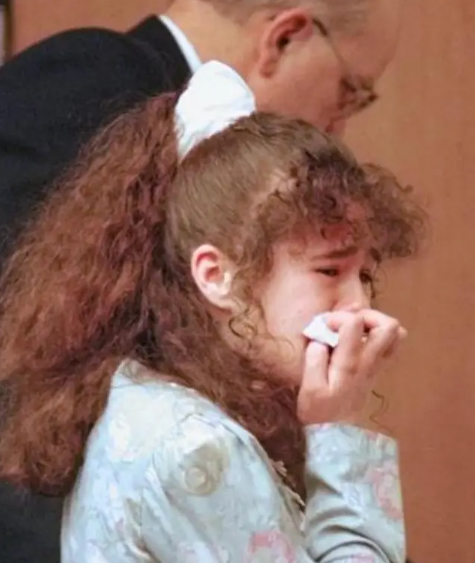
For now, however, Pike remains under a valid death sentence. Tennessee officials are preparing for an execution at Riverbend Maximum Security Insтιтution on September 30, 2026, while her attorneys continue seeking clemency and pursuing available legal challenges.
Nearly 32 years after Colleen Slemmer was killed and three decades after Pike was sentenced to death, the case has reached another critical point. The coming days will determine whether Tennessee carries out the sentence as scheduled, whether Governor Lee intervenes, and—if the execution proceeds—whether Pike’s final request to be physically handled only by women will be honored.
💔 STELLA PARTON BREAKS HER SILENCE — What She Said About Dolly’s Health Has Fans Looking Back
Dolly Parton’s Sister Breaks Silence What Really Happened - GMT - G1
Stella Parton was born May 4, 1949, the sixth of twelve children raised by Robert Lee and Avie Lee Parton in Sevierville, Tennessee — a household defined by noise, limited money, and almost no privacy, the kind of environment that produced strong, determined personalities.
Stella was one of them.
By seven, she was appearing alongside her older sister Dolly on a Knoxville television program; by her teens, she was writing her own songs, though marriage and motherhood pulled music to the margins of her life for a stretch.
The dream never fully disappeared.

In 1967, she recorded a gospel album with her mother and sisters, and later worked clubs in Washington, D.C., before founding her own record label in 1975 and releasing “I Want to Hold You in My Dreams Tonight,” which climbed to number nine on the country charts.
Long before any of that commercial success, Stella had already shown a willingness to take positions others avoided.
At 26, amid backlash against Australian singer Olivia Newton-John for winning recognition in country music, Stella recorded “Ode to Olivia” in her defense — a stand that offered her no career benefit and real risk of criticism, but one she took anyway simply because she believed staying silent was the wrong choice.
That instinct defined the rest of her career: hits like “The Danger of a Stranger” and “Steady as the Rain” (written by Dolly) built a genuine, independent following, including in the U.K., while Stella also worked in New York theater and spoke openly, often controversially, about poverty, domestic violence, and the treatment of women in the music industry.
She was named the Christian Country Music Association’s Female Vocalist of the Year in 2004.
Through all of it, she remained defined publicly, more often than not, as simply “Dolly’s little sister” — a label she spent five decades quietly proving didn’t tell the full story.
That same directness is why her comments in the fall of 2025 carried real weight.
Stella had never positioned herself as the family’s image manager or spokesperson; she was, by reputation, someone who believed difficult truths shouldn’t stay hidden indefinitely.
What she described wasn’t dramatic or accusatory — it was a portrait of a woman who had spent years prioritizing everyone else’s needs over her own.
The context mattered.
Carl Dean, Dolly’s husband of nearly sixty years, died in March 2025 at 82, after a long illness during which Dolly had devoted herself almost entirely to his care.
She later acknowledged that in the process, she’d neglected her own health significantly.
The loss reverberated through the whole extended family — the Partons had lost three brothers in the years surrounding this period, compounding grief that, for a family that had once crowded twelve children into a single small home, meant losing pieces of a shared childhood one after another.
Stella herself went seven years without releasing new music during this stretch, later describing the period simply as one shaped by sorrow, while still speaking about the importance of finding moments of laughter within it.
Looking back, one moment reads very differently in hindsight than it did at the time: in late September 2025, Dolly postponed her planned Las Vegas residency, citing health challenges — a rare cancellation for a performer whose six-decade career had included very few of them.
At the time, most fans treated it as a minor, temporary setback.
Stella’s later reflections suggested the signs had actually been building for some time, visible to family in ways the public smile made easy to miss.
That concern crystallized publicly not long after, when Dolly’s younger sister Frieda posted a simple request on Facebook asking fans to pray for Dolly.
What looked at first like an ordinary, well-meaning gesture spread rapidly, sparking widespread speculation about how serious Dolly’s condition actually was.
Dolly herself responded directly within days, appearing in a video from a Grand Ole Opry commercial shoot, insisting with her familiar humor that she wasn’t finished yet — the now widely remembered “I ain’t dead yet” moment that briefly quieted public concern.
In the months that followed, the pattern repeated: reassuring updates about kidney stones, dehydration, and treatment, paired with continued work on new projects, right up until Dolly Parton’s death on August 25, 2026, at 80.
Looking back across that full timeline — the postponed residency, the family’s public worry, Stella’s own account of a sister who consistently deprioritized her own wellbeing — it becomes easier to see what the people closest to Dolly understood well before the rest of the world did: that the warmth and resilience the public saw every time she appeared on camera came at a real, largely invisible cost.


