Barbara Walters Tried to HUMILIATE Dolly Parton…It Backfired Spectacularly
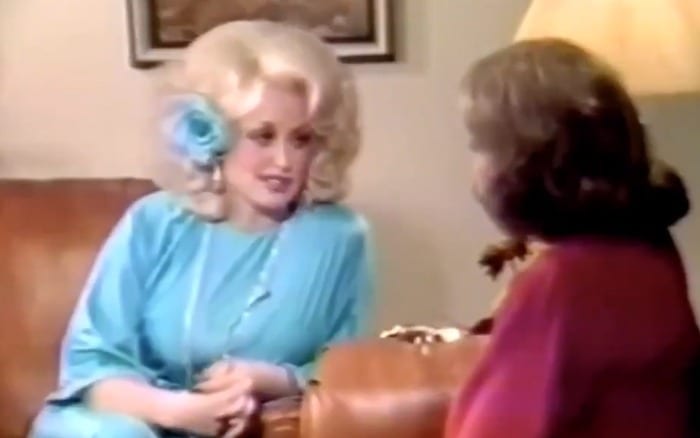
In 1977, already famous but still years away from her disco crossover and Hollywood career, Dolly Parton sat down with Barbara Walters for an interview that has aged into something close to a case study in composure under condescension.
Walters opened by pressing Parton on her rural roots, at one point asking directly whether she would have been called a “hillbilly” back home.
Parton’s response was immediate and good-humored: “If you had of, it would have been something very natural, but I would have probably kicked your shins or something.”
She went on to describe the people she grew up around not as a punchline but with real pride — “very proud people, people with a lot of class.
It was country class, but it was a great deal of class.” She added that while her family wasn’t formally educated, they possessed real intelligence: “good common sense, horse sense we called it.”
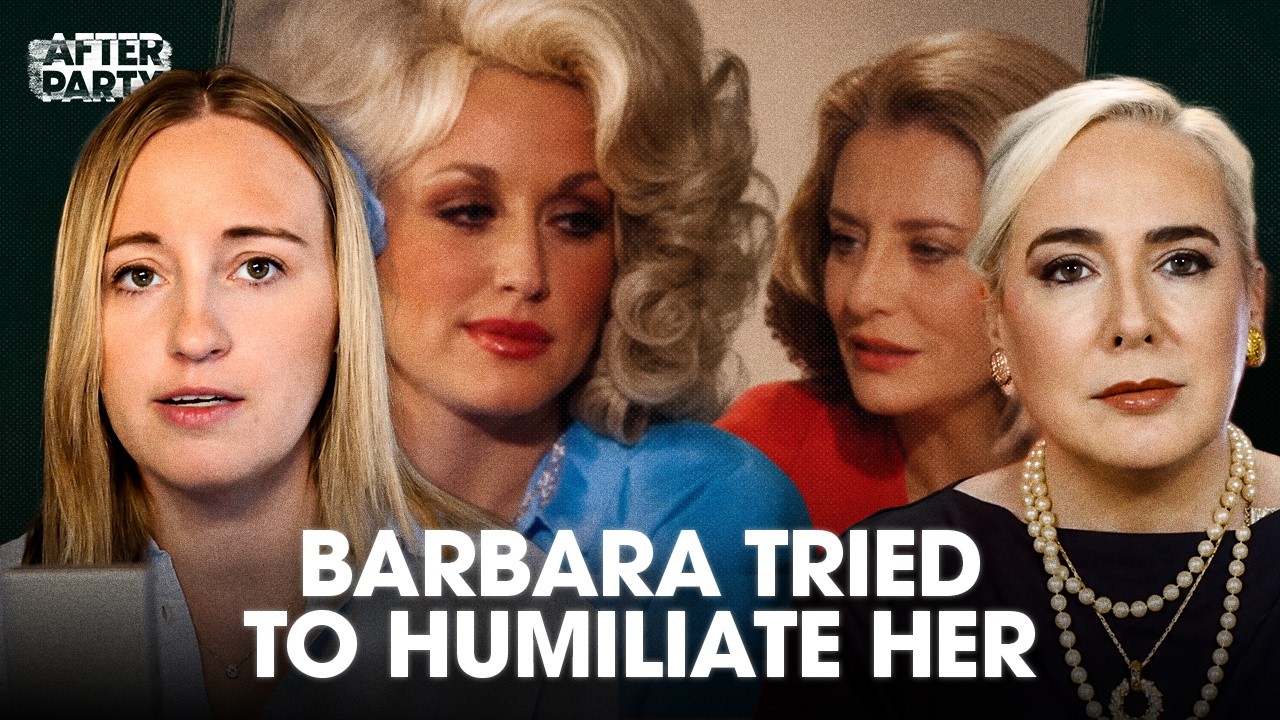
The interview’s most quoted stretch came when Walters pushed further, telling Parton she was beautiful enough that she didn’t need the wigs, the extreme clothes, the exaggerated look.
“You don’t have to look like this,” Walters said. Parton’s answer laid out, in plain terms, a philosophy she’d clearly already fully worked out: “It’s certainly a choice.
I don’t like to be like everybody else. I’ve often made this statement that I would never stoop so low as to be fashionable.”
She explained the strategy behind it directly — get people’s attention with the shock of the appearance first, and once they got past that, they’d see there was something underneath worth appreciating.
“I’m very real where it counts,” she said, “and that’s inside.” When Walters asked whether she ever felt like people were making fun of her, Parton didn’t deny it.

“I know they make fun of me,” she said. “But actually, all these years, the people have thought the joke was on me, but it’s actually been on the public.
I know exactly what I’m doing, and I can change it at any time.” What makes the exchange notable, watched back now, is less what Walters asked than how completely Parton refused to be rattled by it.
She never got defensive, never postured, never let the interview’s condescending framing land. She simply restated her own terms, calmly, every time — an approach commentators discussing the clip decades later have described as Parton “elegantly flipping the table without ever losing her cool.”
That same instinct for control extended to how she handled criticism throughout her career, not just from interviewers but from her own industry.
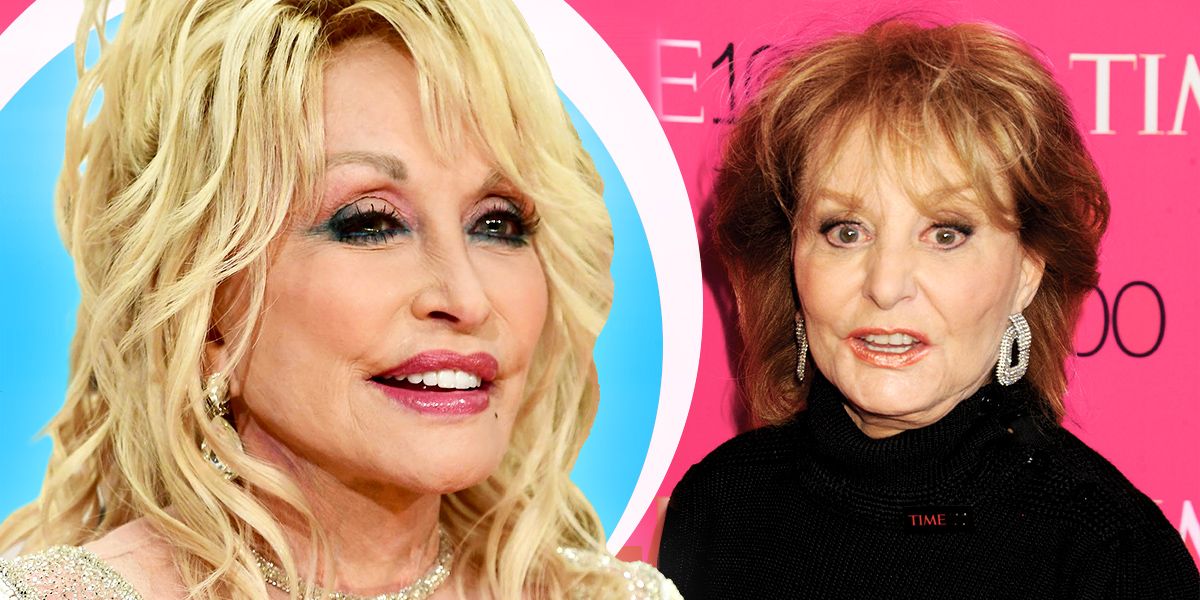
When Parton pursued a pop and disco crossover in the late 1970s, she faced real backlash from parts of Nashville’s country establishment.
In a 1978 interview that resurfaced years later, she was refreshingly blunt about her reasoning, rather than dressing it up as artistic evolution: she’d hit a ceiling doing well in country music alone, and crossing over was, in her words, a straightforward business decision aimed at making more money and reaching more people.
Despite decades in the public eye as a singer-songwriter with an enormous, candid catalog of personal songwriting, Parton never became a tabloid fixture in the way many of her contemporaries did — a distinction that likely contributed to her broad, durable likability across audiences who didn’t necessarily agree on much else.
A widely shared anecdote from the set of Steel Magnolias, recounted by screenwriter Robert Harling, captures the same quality from a different angle.
Filming a Christmas scene in the middle of a sweltering August, with the cast in heavy winter costumes and constant delays, Julia Roberts reportedly turned to Parton — sitting calmly on a porch swing in a white cashmere sweater — and asked why she never complained.
Parton’s answer, delivered serenely: “When I was young and had nothing, I wanted to be rich and famous, and now I am.
So I’m not going to complain about anything.” It’s a good line on its own, but it undersells the scale of what she was actually describing.
She grew up the fourth of twelve children in a household so poor her father couldn’t read or write, in a cabin now replicated at Dollywood specifically to show visitors just how little the family had.
That contrast — the discomfort she’d built a life exempt from, weighed against the discomfort she’d actually survived as a child — helps explain why her persona, as deliberately constructed as it was, never read as hollow.
She wasn’t performing graтιтude. She’d simply already lived through worse than a H๏τ porch in a wool sweater, and she knew it.
💔 STELLA PARTON BREAKS HER SILENCE — What She Said About Dolly’s Health Has Fans Looking Back
Dolly Parton’s Sister Breaks Silence What Really Happened - GMT - G1
Stella Parton was born May 4, 1949, the sixth of twelve children raised by Robert Lee and Avie Lee Parton in Sevierville, Tennessee — a household defined by noise, limited money, and almost no privacy, the kind of environment that produced strong, determined personalities.
Stella was one of them.
By seven, she was appearing alongside her older sister Dolly on a Knoxville television program; by her teens, she was writing her own songs, though marriage and motherhood pulled music to the margins of her life for a stretch.
The dream never fully disappeared.

In 1967, she recorded a gospel album with her mother and sisters, and later worked clubs in Washington, D.C., before founding her own record label in 1975 and releasing “I Want to Hold You in My Dreams Tonight,” which climbed to number nine on the country charts.
Long before any of that commercial success, Stella had already shown a willingness to take positions others avoided.
At 26, amid backlash against Australian singer Olivia Newton-John for winning recognition in country music, Stella recorded “Ode to Olivia” in her defense — a stand that offered her no career benefit and real risk of criticism, but one she took anyway simply because she believed staying silent was the wrong choice.
That instinct defined the rest of her career: hits like “The Danger of a Stranger” and “Steady as the Rain” (written by Dolly) built a genuine, independent following, including in the U.K., while Stella also worked in New York theater and spoke openly, often controversially, about poverty, domestic violence, and the treatment of women in the music industry.
She was named the Christian Country Music Association’s Female Vocalist of the Year in 2004.
Through all of it, she remained defined publicly, more often than not, as simply “Dolly’s little sister” — a label she spent five decades quietly proving didn’t tell the full story.
That same directness is why her comments in the fall of 2025 carried real weight.
Stella had never positioned herself as the family’s image manager or spokesperson; she was, by reputation, someone who believed difficult truths shouldn’t stay hidden indefinitely.
What she described wasn’t dramatic or accusatory — it was a portrait of a woman who had spent years prioritizing everyone else’s needs over her own.
The context mattered.
Carl Dean, Dolly’s husband of nearly sixty years, died in March 2025 at 82, after a long illness during which Dolly had devoted herself almost entirely to his care.
She later acknowledged that in the process, she’d neglected her own health significantly.
The loss reverberated through the whole extended family — the Partons had lost three brothers in the years surrounding this period, compounding grief that, for a family that had once crowded twelve children into a single small home, meant losing pieces of a shared childhood one after another.
Stella herself went seven years without releasing new music during this stretch, later describing the period simply as one shaped by sorrow, while still speaking about the importance of finding moments of laughter within it.
Looking back, one moment reads very differently in hindsight than it did at the time: in late September 2025, Dolly postponed her planned Las Vegas residency, citing health challenges — a rare cancellation for a performer whose six-decade career had included very few of them.
At the time, most fans treated it as a minor, temporary setback.
Stella’s later reflections suggested the signs had actually been building for some time, visible to family in ways the public smile made easy to miss.
That concern crystallized publicly not long after, when Dolly’s younger sister Frieda posted a simple request on Facebook asking fans to pray for Dolly.
What looked at first like an ordinary, well-meaning gesture spread rapidly, sparking widespread speculation about how serious Dolly’s condition actually was.
Dolly herself responded directly within days, appearing in a video from a Grand Ole Opry commercial shoot, insisting with her familiar humor that she wasn’t finished yet — the now widely remembered “I ain’t dead yet” moment that briefly quieted public concern.
In the months that followed, the pattern repeated: reassuring updates about kidney stones, dehydration, and treatment, paired with continued work on new projects, right up until Dolly Parton’s death on August 25, 2026, at 80.
Looking back across that full timeline — the postponed residency, the family’s public worry, Stella’s own account of a sister who consistently deprioritized her own wellbeing — it becomes easier to see what the people closest to Dolly understood well before the rest of the world did: that the warmth and resilience the public saw every time she appeared on camera came at a real, largely invisible cost.