The Nolan Wells case has entered a new and deeply disputed chapter, more than two months after the 18-year-old Mississippi college student disappeared during a Fourth of July trip to Horn Island, because a Jackson County grand jury has now declined to bring criminal charges against anyone involved, while attorneys representing Nolan’s family have simultaneously released new cellphone and autopsy information that they say raises additional questions about what happened during his final hours.
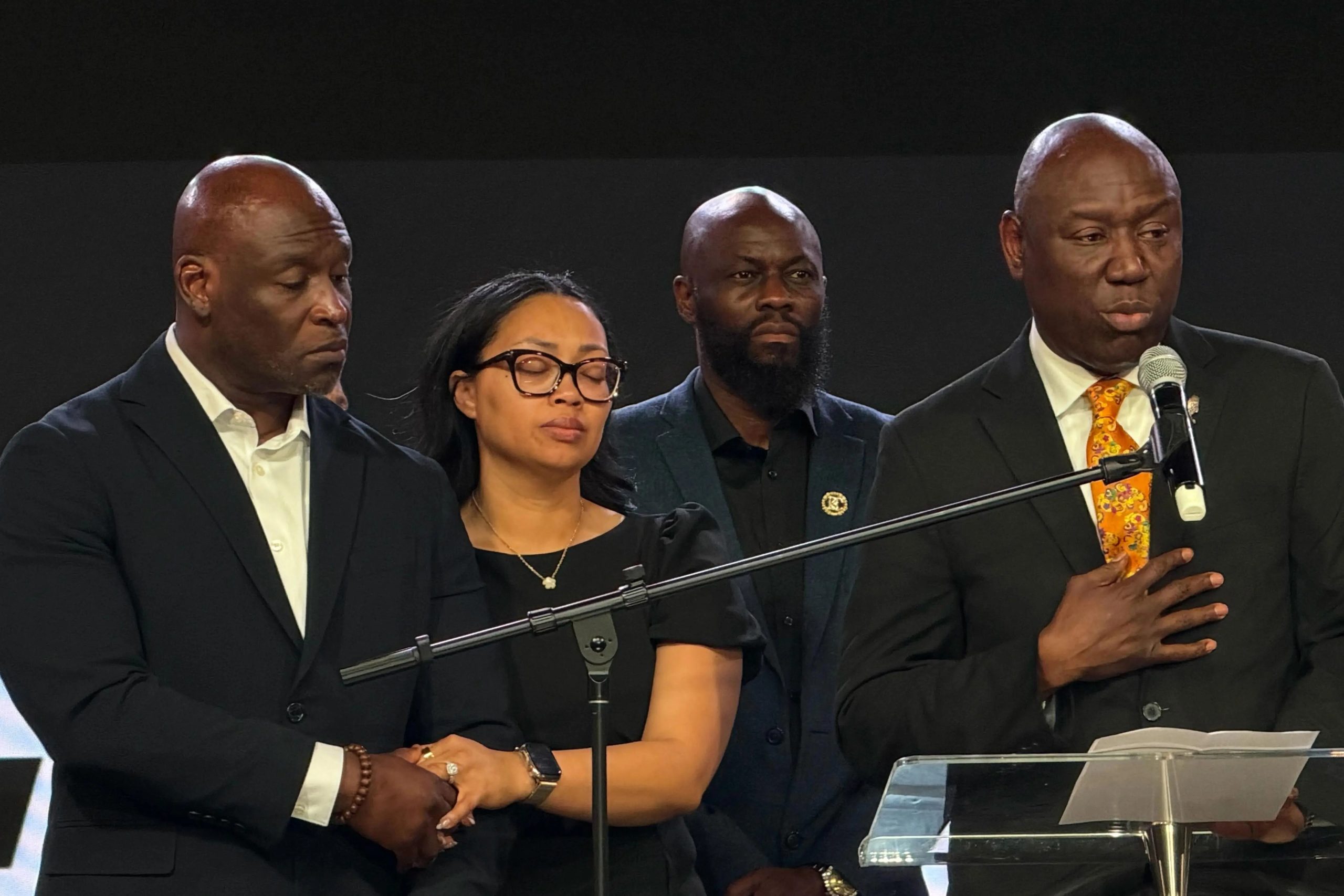
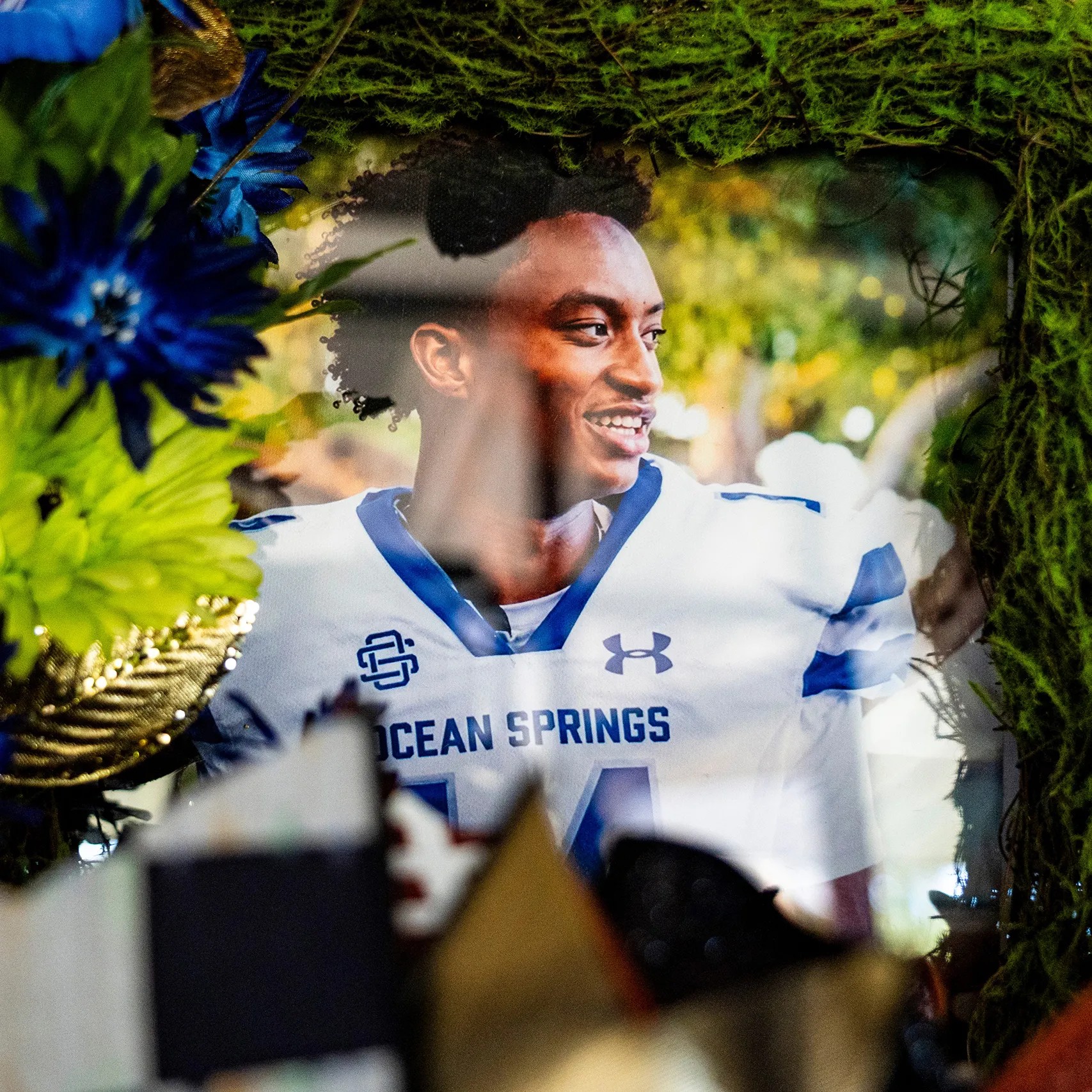
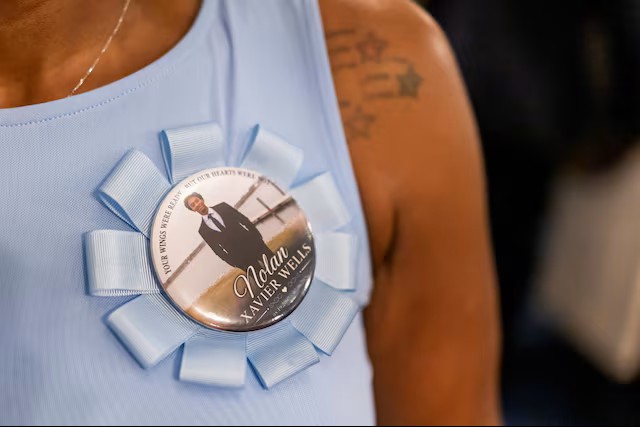
Nolan disappeared on July 4 after traveling with friends to Horn Island, a barrier island off Mississippi’s Gulf Coast, and his body was discovered in the water two days later on July 6. From the beginning, the central mystery was not simply where Nolan was found, but what happened between the moment he was last seen alive and the moment his body was recovered. His friends told investigators that Nolan had chosen to remain on the island while they returned to the mainland, reportedly because he intended to continue socializing and believed he had another way to get back. Nolan’s family, however, repeatedly questioned whether that explanation made sense, particularly because his cellphone traveled back to the mainland without him.
That question eventually became one of the most important issues in the investigation: Why would an 18-year-old remain on a remote island without his phone, and what exactly happened after the boats left?
For weeks, the answer remained elusive.
Then came the grand jury.
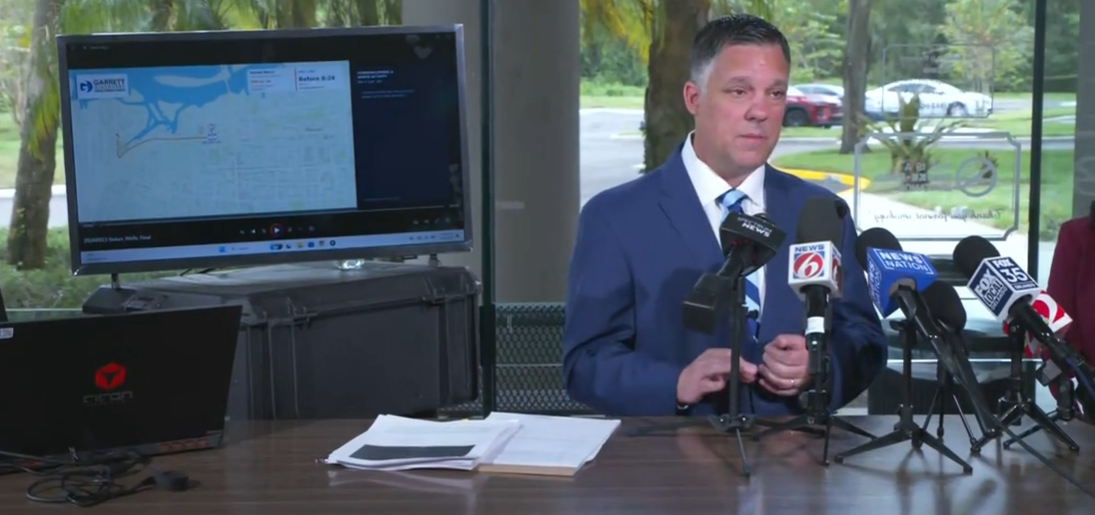
On September 21, Jackson County District Attorney Angel Myers McIlrath announced that a 23-member grand jury had unanimously returned a “no true bill,” meaning it found insufficient evidence to issue criminal indictments. According to authorities, the panel reviewed an extensive body of evidence, including cellphone forensic reports, GPS information, surveillance footage, testimony from 43 witnesses and material obtained through 132 subpoenas. The grand jury also concluded that there was no evidence of criminal conduct by the people who accompanied Nolan to the island.
The panel’s report said the position, condition, location and timing of the discovery of Nolan’s body were consistent with drowning, while also acknowledging that both the state medical examiner and an independent forensic pathologist hired by the family had classified the cause and manner of death as undetermined. The report also said investigators found no evidence that Nolan had been involved in a fight or altercation on the island and specifically rejected claims that his friends had engaged in criminal conduct.
But that did not end the controversy.
Instead, it triggered another wave of questions.
Just days after the grand jury decision, attorney Ben Crump and the Wells family released information from an independent forensic examination of Nolan’s cellphone, along with details from the official state autopsy. Digital forensic expert Andrew Garrett said his examination recovered extensive information from the device, including GPS data and Snapchat communications that helped reconstruct the phone’s movements before and after Nolan disappeared. According to Garrett, Nolan used facial recognition to unlock the phone at approximately 2:17 p.m. on July 4, after which the device was locked and continued receiving messages as it traveled away from Horn Island.
Even more attention-grabbing was the disclosure that some Snapchat messages had been deleted.
But there is an important distinction here.
Garrett said he could identify deleted Snapchat data, but he could not determine who deleted the messages or why. There has been no publicly presented evidence establishing that someone physically took Nolan’s phone and deliberately erased evidence. Jackson County District Attorney Angel Myers McIlrath strongly disputed suggestions that someone had accessed Nolan’s phone after its last known use, saying the deleted activity involved other Snapchat users rather than someone physically operating Nolan’s device.
That disagreement has now become one of the most significant unresolved disputes surrounding the case.
Was information actually deleted from Nolan’s digital history?
Yes, according to the family’s forensic expert.
Does that prove someone tampered with Nolan’s phone?
No.
Could the deleted material be relevant to understanding Nolan’s final hours?
That remains unknown publicly.
And could the deletion simply reflect ordinary Snapchat behavior by other users rather than intentional evidence destruction?
The district attorney says that is what the available evidence indicates.
Then there is the autopsy.
The state medical examiner’s report, released publicly after the grand jury decision, concluded that the cause and manner of Nolan’s death were undetermined. This is an especially important point because the grand jury separately described the circumstances surrounding the recovery of his body as consistent with drowning. Those statements are not necessarily contradictory: “consistent with drowning” describes what the available circumstances may suggest, while an “undetermined” cause of death means the medical examiner could not establish drowning—or another specific cause—with sufficient certainty.
The autopsy also documented bruising, including injuries involving the back of Nolan’s head, shoulder and other areas. The grand jury considered testimony from a witness who reportedly saw Nolan slip awkwardly from the side of a boat at around 3:30 p.m. on July 4. According to the grand jury report, Nolan continued socializing afterward and did not appear seriously injured. The panel concluded that the bruising was not fatal and could not determine whether the fall caused it.
Yet another controversial detail concerns the absence of water in certain parts of Nolan’s body.
During the September 24 press conference, members of the Wells family’s legal team pointed to the autopsy’s documentation that Nolan’s airways, lungs and stomach were empty, questioning how drowning could be considered consistent with the evidence. That argument has become a central part of the family’s criticism of the investigation. But again, the absence of those findings does not by itself establish that drowning did not occur, nor does it establish homicide.
The dispute has now moved beyond the question of what happened to Nolan and into a disagreement over how the investigation itself was conducted.
McIlrath has defended the investigation, saying her office gave the grand jury access to cellphone downloads, GPS data, surveillance material, witness testimony and the autopsy evidence. She has also disputed the suggestion that prosecutors ignored information from Nolan’s family. According to her public statement, the family’s legal team had opportunities to provide evidence to the grand jury and chose to conduct its own private phone examination instead.
Crump and the family’s lawyers see the situation differently.
They are calling for greater transparency and continuing to question the grand jury’s conclusion, while seeking further investigation and potentially federal scrutiny. Their argument is essentially that a grand jury’s decision not to indict does not necessarily answer every factual question surrounding Nolan’s death.
And that distinction matters.
A no true bill is not the same thing as a finding that every detail of the case has been scientifically explained. It means the grand jury did not find sufficient grounds to issue criminal charges based on the evidence presented to it.
At the same time, the absence of criminal charges should not be interpreted as proof that investigators overlooked a murder or that Nolan was secretly killed.
As of September 27, there is no publicly established evidence proving that Nolan Wells was murdered, and no one has been criminally charged in connection with his death. The grand jury specifically found no criminal conduct by the people who accompanied Nolan, and prosecutors have defended the integrity of the investigation.
Still, several questions remain compelling.
Why did Nolan remain on Horn Island while his phone returned to the mainland?
What exactly happened between his last confirmed activity and the discovery of his body?
What do the deleted Snapchat records actually contain?
Why did both the official and independent medical examinations leave the cause and manner of death undetermined?
Could the bruising documented on Nolan’s body be fully explained by the reported fall?
And does the available digital evidence completely reconstruct his final hours—or are there still gaps?
Those questions should not automatically be turned into accusations, but they explain why the case continues to generate public attention even after the grand jury’s decision.
For Nolan’s family, the grand jury’s “no true bill” did not necessarily feel like the end of the story.
Instead, it appears to have opened another chapter.
The state says the evidence did not support criminal charges.
The family says significant questions remain.
The cellphone evidence is being interpreted differently by the two sides.
The medical evidence does not provide a definitive cause of death.
And the grand jury has already made its decision.
What happens next may depend on whether genuinely new evidence emerges.
For now, the most accurate conclusion is also the most frustrating one:
Nolan Wells’ death has not resulted in criminal charges, but the precise circumstances of how he died remain medically undetermined—and the dispute over what the evidence really shows is far from over.
💔 STELLA PARTON BREAKS HER SILENCE — What She Said About Dolly’s Health Has Fans Looking Back
Dolly Parton’s Sister Breaks Silence What Really Happened - GMT - G1
Stella Parton was born May 4, 1949, the sixth of twelve children raised by Robert Lee and Avie Lee Parton in Sevierville, Tennessee — a household defined by noise, limited money, and almost no privacy, the kind of environment that produced strong, determined personalities.
Stella was one of them.
By seven, she was appearing alongside her older sister Dolly on a Knoxville television program; by her teens, she was writing her own songs, though marriage and motherhood pulled music to the margins of her life for a stretch.
The dream never fully disappeared.

In 1967, she recorded a gospel album with her mother and sisters, and later worked clubs in Washington, D.C., before founding her own record label in 1975 and releasing “I Want to Hold You in My Dreams Tonight,” which climbed to number nine on the country charts.
Long before any of that commercial success, Stella had already shown a willingness to take positions others avoided.
At 26, amid backlash against Australian singer Olivia Newton-John for winning recognition in country music, Stella recorded “Ode to Olivia” in her defense — a stand that offered her no career benefit and real risk of criticism, but one she took anyway simply because she believed staying silent was the wrong choice.
That instinct defined the rest of her career: hits like “The Danger of a Stranger” and “Steady as the Rain” (written by Dolly) built a genuine, independent following, including in the U.K., while Stella also worked in New York theater and spoke openly, often controversially, about poverty, domestic violence, and the treatment of women in the music industry.
She was named the Christian Country Music Association’s Female Vocalist of the Year in 2004.
Through all of it, she remained defined publicly, more often than not, as simply “Dolly’s little sister” — a label she spent five decades quietly proving didn’t tell the full story.
That same directness is why her comments in the fall of 2025 carried real weight.
Stella had never positioned herself as the family’s image manager or spokesperson; she was, by reputation, someone who believed difficult truths shouldn’t stay hidden indefinitely.
What she described wasn’t dramatic or accusatory — it was a portrait of a woman who had spent years prioritizing everyone else’s needs over her own.
The context mattered.
Carl Dean, Dolly’s husband of nearly sixty years, died in March 2025 at 82, after a long illness during which Dolly had devoted herself almost entirely to his care.
She later acknowledged that in the process, she’d neglected her own health significantly.
The loss reverberated through the whole extended family — the Partons had lost three brothers in the years surrounding this period, compounding grief that, for a family that had once crowded twelve children into a single small home, meant losing pieces of a shared childhood one after another.
Stella herself went seven years without releasing new music during this stretch, later describing the period simply as one shaped by sorrow, while still speaking about the importance of finding moments of laughter within it.
Looking back, one moment reads very differently in hindsight than it did at the time: in late September 2025, Dolly postponed her planned Las Vegas residency, citing health challenges — a rare cancellation for a performer whose six-decade career had included very few of them.
At the time, most fans treated it as a minor, temporary setback.
Stella’s later reflections suggested the signs had actually been building for some time, visible to family in ways the public smile made easy to miss.
That concern crystallized publicly not long after, when Dolly’s younger sister Frieda posted a simple request on Facebook asking fans to pray for Dolly.
What looked at first like an ordinary, well-meaning gesture spread rapidly, sparking widespread speculation about how serious Dolly’s condition actually was.
Dolly herself responded directly within days, appearing in a video from a Grand Ole Opry commercial shoot, insisting with her familiar humor that she wasn’t finished yet — the now widely remembered “I ain’t dead yet” moment that briefly quieted public concern.
In the months that followed, the pattern repeated: reassuring updates about kidney stones, dehydration, and treatment, paired with continued work on new projects, right up until Dolly Parton’s death on August 25, 2026, at 80.
Looking back across that full timeline — the postponed residency, the family’s public worry, Stella’s own account of a sister who consistently deprioritized her own wellbeing — it becomes easier to see what the people closest to Dolly understood well before the rest of the world did: that the warmth and resilience the public saw every time she appeared on camera came at a real, largely invisible cost.