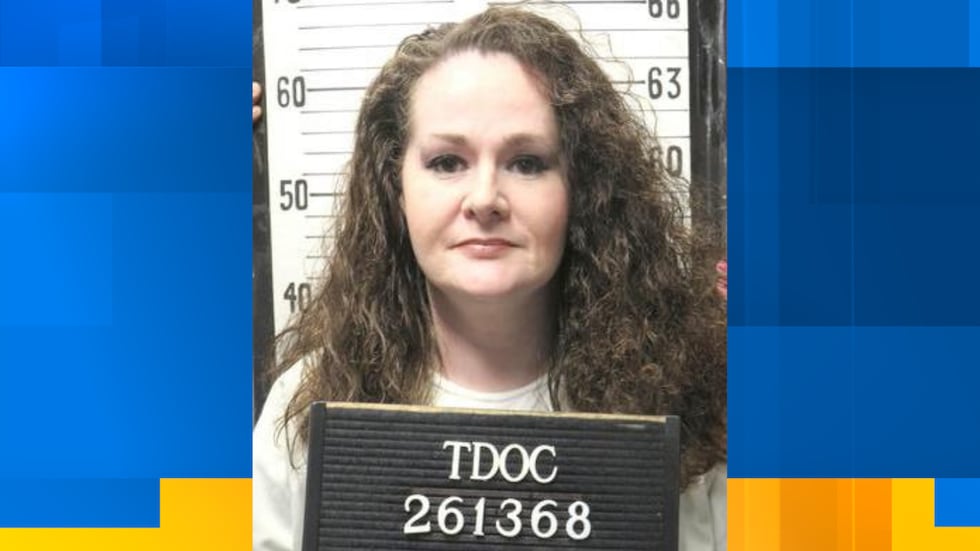
KNOXVILLE, Tenn. (WVLT) – A hearing began Tuesday to review the planned execution of Christa Gail Pike, the only woman on death row in Tennessee. Her execution is currently scheduled to take place in September.
Day 3
The final day of testimony featured a practical, “hands-on” perspective from the state’s last witness, who argued that Pike is a “standard” patient with accessible veins, before entering final remarks.
Thrombocytosis Diagnosis & IV Access Risks
- Plaintiff’s Argument: Pike suffers from essential thrombocytosis (excess blood platelets). Her experts (Drs. Van Norman and Zivett) argued that this condition increases the risk of IV line clotting and fragile veins. They testified that pentobarbital causes pulmonary edema (fluid in the lungs), which induces a painful sensation of drowning and burning while the inmate is still conscious.
- State’s Argument: The State’s hematologist (Dr. Mansour) testified that Pike’s platelet counts present a very low risk of clotting or bleeding at the IV site. The State argued that the plaintiff’s claims are speculative, lack scientific sourcing, and fail to establish a high probability of severe pain.
PTSD, Sєxual ᴀssault History, and Prison Transfer
- Plaintiff’s Argument: Pike has severe PTSD from extensive childhood and adolescent Sєxual trauma. Dr. Bethany Brand testified that close surveillance (even by female guards) and transferring Pike from her long-term housing unit to Riverbend Maximum Security Prison in her final 24 hours will trigger severe psychological distress, causing her to involuntarily relive past trauma while strapped to the gurney.
- State’s Argument: The State acknowledged Pike’s traumatic history but noted she will only be at Riverbend for the final 24 hours, and the prison will prioritize female guards for surveillance. The State argued that psychological distress alone does not consтιтute an Eighth Amendment violation and that executing her at her current facility is logistically impossible.
Compromised and Small Veins
- Plaintiff’s Argument: Pike’s obesity, history of repeated blood draws, and small veins make peripheral IV access difficult. Her counsel argued that repeated needle sticks will prolong her terror, and any extravasation (fluid leaking into tissue) of the caustic pentobarbital would cause severe, agonizing tissue burns comparable to “bleach.”
- State’s Argument: The State argued there is no physical evidence of “small veins.” Medical records show 12 of her last 13 blood draws were successful on the first attempt. Furthermore, the State verified that the execution IV team consists of certified, highly experienced professionals.
Alternative Methods of Execution
- Plaintiff’s Argument: Pike proposed two alternatives to reduce pain and psychological terror:
- Central Line IV: Administered by a physician using ultrasound to directly access a deep vein, which would bypᴀss compromised peripheral veins and speed up the process.
- Judicial Hanging: A historically established method that can cause instantaneous death via spinal cord transection, or rapid unconsciousness (within 13 to 60 seconds) through strangulation, avoiding the trauma of being strapped to a gurney.
- State’s Argument: The State countered that both alternatives are invalid:
- A central line carries high clinical risks of severe arterial bleeding and organ damage.
- Hanging is highly unpredictable, carries risks of decapitation or prolonged strangulation, and the state lacks the training or equipment to perform it. The State ᴀsserted that pentobarbital reliably induces painless unconsciousness within 20 to 30 seconds, followed by cardiovascular collapse.
Judge Ward did not rule on anything, but he will answer four of the five questions that the Tennessee Supreme Court asked for and provide his findings of facts by Friday, Aug. 21 for all parties involved.
The following questions are what Ward is expected to answer by next week:
- Given Ms. Pike’s diagnosis of thrombocytosis, whether achieving peripheral IV access pursuant to the current lethal injection protocol would make it “sure or very likely” that the challenged protocol will “cause [Ms. Pike] serious illness and needless suffering.”
- Given Ms. Pike’s cited history of Sєxual ᴀssault and ᴀsserted diagnosis of Post Traumatic Stress Disorder (“PTSD”), whether the movement of Ms. Pike to Riverbend Maximum Security Prison before the execution, where she would be observed by male prison officials for two weeks prior to the execution, would make it “sure or very likely” that the challenged protocol will “cause [Ms. Pike] serious illness and needless suffering.”
- Given Ms. Pike’s allegedly small and compromised veins, whether achieving peripheral IV access pursuant to the current lethal injection protocol would make it “sure or very likely” that the challenged protocol will “cause [Ms. Pike] serious illness and needless suffering.”
- Whether Ms. Pike’s proposed alternative methods of execution would “significantly reduce a substantial risk of severe pain.”
It was previously agreed upon that he will not answer a fifth question regarding whether the Tennessee Department of Corrections is required or will allow Pike “to have a clergy member or spiritual advisor in the execution chamber during her execution.”
Ward noted that while the state Supreme Court must evaluate the likelihood of success of Pike’s collateral litigation to grant a stay of execution, no formal complaint detailing that litigation has yet been filed.
Day 2
The second day of testimony started by focusing on Pike’s mental health, specifically her diagnoses of Post-Traumatic Stress Disorder (PTSD) and Bipolar Disorder.
A History of “Unimaginable” Abuse
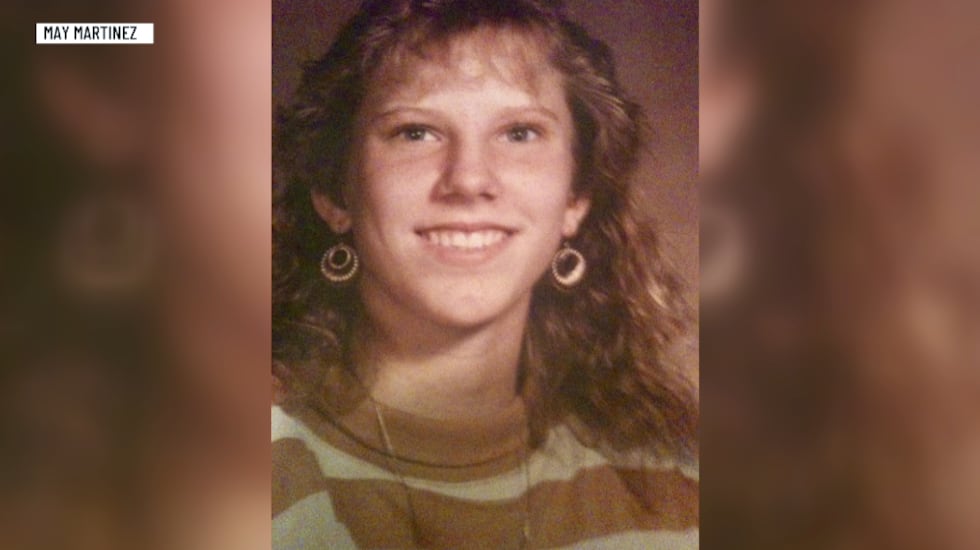
Dr. Bethany Brand, a licensed clinical psychologist and trauma expert, took the stand to detail Pike’s extensive history of childhood Sєxual violence. Brand described Pike as a “very abused girl,” recounting a series of horrific ᴀssaults that began when she was just in pre-K.
Brand testified that Pike survived multiple rapes by at least six different people throughout her childhood and adolescence, including an incident at age 11 where she was pinned down and Sєxually ᴀssaulted with sticks, and an animal.
The “Survival Brain” and the Gurney
Dr. Brand warned the judge that the state’s execution protocol, specifically being forcibly removed from a cell and strapped to a gurney, would be “highly triggering” for a survivor of such trauma. She explained that being held down by guards would likely activate Pike’s “survival brain,” causing her to lose all sense of current reality and feel as though she is reliving trauma.
“She will be transported back in time to when she was raped,” Brand testified. She described a “defense cascade” where Pike’s body could become rigid or go into a “deep shutdown” as a result of the re-traumatization.
Constant Observation and “Agency”
The expert also addressed the state’s plan for “death watch,” where an inmate is monitored every 15 minutes. Brand argued that such invasive observation, even by female guards, would be “very psychologically harmful” for someone with Pike’s history of being watched and abused.
In a striking moment, Dr. Brand suggested that hanging might be a less psychologically damaging alternative for Pike. She argued that hanging provides a sense of “agency” and involves less physical restraint by guards, which could reduce the risk of a severe psychological breakdown in her final moments.
However, the state said that there is no execution protocol for hanging, and testimony from Warden Kenneth Nelsen on Tuesday made it clear that Tennessee does not allow hangings as a form of executions.
The State’s Reʙuттal: “Low Risk”
In the afternoon, the state called its own expert, Dr. Richard Mansour, a hematologist from LSU. Mansour offered a much more optimistic view of Pike’s physical condition, disagreeing with the defense’s claim that her blood disorder makes her “un-executable.”
Mansour testified that Pike is a “low risk” patient and that her blood condition, essential thrombocytosis, is not a threat to her execution. He pointed to her medical records, which show 12 or 13 successful blood draws, as evidence that her veins are accessible and “successful” for an IV.
“I wouldn’t put a 1% chance” of a catastrophic event with her current levels, Mansour told the court. He also stated that her blood condition does not correlate with pulmonary edema (fluid in the lungs) and that her risk of bleeding is minimal as long as she continues taking baby aspirin. However, he added that, “if she was hit by a Mack truck,” that it would cause catastrophic damage.
The IV Experience Debate
Under cross-examination, the defense questioned Dr. Mansour’s practical experience with IVs. Mansour admitted that while he observes IV access in his clinic, he hasn’t personally placed an IV in approximately 15 years.
This stood in contrast to the defense expert, Dr. Gail Van Norman, who testified on Tuesday to placing tens of thousands of IVs over her 40-year career.
The “Hanging” Debate
The defense called Dr. Scott Goldstein, an emergency medicine expert, to testify about hanging as a more humane alternative to lethal injection. Goldstein argued that a proper judicial hanging can cause instantaneous death by severing the spinal cord.. Even if the cord is not severed, he testified that consciousness is lost in 10 to 20 seconds through strangulation.
Goldstein claimed that the “botch rate” for hangings is 3.12%, significantly lower than the 7.2% rate he cited for lethal injections He also noted that the materials for hanging—wood and rope—are easily found on the open market, unlike the drugs used for lethal injection.
However, under cross-examination, the state pointed out that Dr. Goldstein has no specific training or experience with judicial hangings and that his research on the subject included the use of AI editorial tools.
Mechanics of Hanging
Dr. Karen L. Kelly, a forensic pathologist with 30 years of experience and 7,000 autopsies to her credit, provided a detailed look at the mechanics of hanging. She explained that in most cases, death is caused by “brain asphyxia”—not a lack of oxygen, but the collapse of the jugular veins under the weight of the body, which prevents blood from leaving the brain.
Dr. Kelly testified that while unconsciousness occurs in under a minute, the heart can continue to beat for several minutes afterward. She also noted that internal autopsies of hanging victims often show surprisingly little trauma to the neck structures, such as fractures or a collapsed trachea.
The State’s Reʙuттal: “Quick and Painless”
The state called Dr. Joseph Antognini, an expert in anesthesiology, to rebut the defense’s claims of suffering. Antognini argued that the mᴀssive dose of pentobarbital used by the state causes unconsciousness so quickly that an inmate would be unable to feel pain.
He estimated that while about 10% of people might feel “mild pain” when the drug first enters the vein, it would not be “excruciating”. Antognini also disputed the defense’s focus on pulmonary edema (fluid in the lungs), stating that the condition likely occurs only after the inmate is already profoundly unconscious or even after death.
To support his view, he pointed to “medical aid in dying” (ᴀssisted suicide) in other countries, arguing that if these drugs caused suffering, medical professionals would not use them for that purpose.
Day 1
Senior Judge Mark Ward, acting as the state-appointed Special Master, opened the proceedings by clarifying the narrow scope of the litigation. Pike, who has completed her three-tier appeals process, filed a motion with the Tennessee Supreme Court requesting a special master hearing to evaluate specific physical and psychological challenges regarding her upcoming execution, originally set for Sept. 30, 2026.
“This is not collateral litigation,” Judge Ward emphasized. “The Supreme Court needs to know certain things, and they’ve listed five things they need to know. They want me to give them the facts and findings; they will make the ultimate decision.”
The hearing focused heavily on two key areas Tuesday morning: the logistics of housing and transferring Pike prior to execution and the viability of peripheral IV access given her medical history.
Debate Over Guard Gender and Isolation
Under current Tennessee Department of Correction (TDOC) protocols, death row inmates are moved to the Capital Punishment Unit at Riverbend Maximum Security Insтιтution 14 days prior to execution. However, TDOC officials testified that they plan to transfer Pike from the Debra K. Johnson Rehabilitation Center to Riverbend no earlier than 24 hours before her scheduled execution to minimize psychological distress.
While the state conceded that Pike will be observed exclusively by female guards during her transport and 24-hour observation window, State prosecutors noted they could not offer an absolute guarantee.
“We’re not in the business of guarantees,” the State’s attorney, Will Ayers, argued, citing potential emergency staffing shortages. “But the goal is to ᴀssign all female staff.”
Defense attorneys raised concerns that housing Pike at Riverbend, even briefly, could trigger her documented Post-Traumatic Stress Disorder (PTSD) stemming from a history of Sєxual ᴀssault, particularly if male guards are present.
Linda Thomas, ᴀssistant Commissioner of Prison Operations, testified that TDOC is prepared to make adjustments, including the use of privacy screens in Pike’s cell. “We identified female staff that we will utilize,” Thomas testified. “Go through the process as we would do it for another inmate.”
Arguments Over Alternative Execution Methods
Pike’s legal team is also challenging the state’s lethal injection protocol, arguing that her small, compromised veins make peripheral IV access nearly impossible and highly painful. The defense pushed to include the placement of a central line (an IV placed in a major vein) as a safer alternative to standard peripheral lines.
The defense also presented hanging as her preferred alternative method of execution, ᴀsserting that her Buddhist faith prevents her from choosing the electric chair, Tennessee’s other legally authorized alternative.
“Her desired method is hung,” defense counsel stated.
Warden Kenneth Joseph Nelson of Riverbend Maximum Security Insтιтution testified that the prison is only equipped for lethal injection and the electric chair. “We do not have equipment, and [hanging] is not approved by Tennessee law. We wouldn’t be able to support that,” Nelson said.
Judge Ward ruled that the defense could present evidence comparing the pain and circumstances of peripheral IV access to both hanging and a central line insertion, though he barred inquiries into the specific medical qualifications or idenтιтies of past execution teams.
Chilling Account of a “Botched” Execution
The afternoon session featured a vivid and emotional account from ACLU attorney Maria DeLiberato, who witnessed the failed execution of Tony Carruthers in May 2026. DeLiberato described a scene where guards dressed like a “SWAT team” forcibly removed Carruthers from his cell and strapped him to a gurney.
She testified that the execution team struggled for over 30 minutes to find a vein, sticking Carruthers with needles more than a dozen times in his arms, hands, and even his feet.
“He was wincing and appeared to be in pain,” DeLiberato told the court. “I noted about a half-dollar sized amount of blood oozing from the puncture wound. It was incredibly vivid and very clearly painful.”
Medical Warnings: “Like Bleach”
The hearing then turned to a series of medical experts who warned that Pike’s unique health conditions make her a high-risk candidate for a similar failure.
Dr. Gail Van Norman, a board-certified anesthesiologist, testified that Pike’s obesity and a rare blood condition called essential thrombocytosis put her at a “significantly elevated risk” for IV access failure.
She noted that prison staff already have to use tiny “ʙuттerfly needles”—typically used for babies—just to draw Pike’s blood, and warned that lethal drugs could cause her veins to literally burst.
Dr. Joel Zivot, an expert in critical care, went even further, comparing the execution drug pentobarbital to bleach. He called it a “caustic” substance that can cause severe chemical burns if it leaks into human tissue.
Zivot described the “terrifying experience” of pulmonary edema, a condition where the lungs fill with blood and fluid. He compared it to having an entire glᴀss of water poured into one’s airway. He explained that the caustic drug literally burns through the thin membranes of the lungs, causing blood to flood the airways while the heart is still beating.
Pike’s Unique Risks: Clotting and Pain
Dr. Zivot also highlighted Pike’s specific medical records, noting that her platelet count has reached as high as one million—far above the normal range. He warned that this condition could cause her IV catheter to clot almost immediately, rendering the execution method useless
Crucially, Zivot argued that pentobarbital is not a pain reliever. He testified that inmates remain “sensate to pain” while experiencing the sensation of their lungs filling with fluid He added that the “altered state of awareness” caused by such drugs is short-lived, potentially lasting only five to ten minutes before a person begins to regain awareness.
Concessions and Alternative Methods
Earlier in the day, the state made some concessions, agreeing to allow Pike to have a spiritual Buddha in the execution chamber and stating a “goal” to use an all-female staff to address her history of trauma as a survivor of Sєxual violence.
However, Pike’s lawyers are pushing for a 100% guarantee on the staff gender and have even suggested hanging as a more humane alternative to lethal injection, citing her Buddhist faith and medical risks.
💔 STELLA PARTON BREAKS HER SILENCE — What She Said About Dolly’s Health Has Fans Looking Back
Dolly Parton’s Sister Breaks Silence What Really Happened - GMT - G1
Stella Parton was born May 4, 1949, the sixth of twelve children raised by Robert Lee and Avie Lee Parton in Sevierville, Tennessee — a household defined by noise, limited money, and almost no privacy, the kind of environment that produced strong, determined personalities.
Stella was one of them.
By seven, she was appearing alongside her older sister Dolly on a Knoxville television program; by her teens, she was writing her own songs, though marriage and motherhood pulled music to the margins of her life for a stretch.
The dream never fully disappeared.

In 1967, she recorded a gospel album with her mother and sisters, and later worked clubs in Washington, D.C., before founding her own record label in 1975 and releasing “I Want to Hold You in My Dreams Tonight,” which climbed to number nine on the country charts.
Long before any of that commercial success, Stella had already shown a willingness to take positions others avoided.
At 26, amid backlash against Australian singer Olivia Newton-John for winning recognition in country music, Stella recorded “Ode to Olivia” in her defense — a stand that offered her no career benefit and real risk of criticism, but one she took anyway simply because she believed staying silent was the wrong choice.
That instinct defined the rest of her career: hits like “The Danger of a Stranger” and “Steady as the Rain” (written by Dolly) built a genuine, independent following, including in the U.K., while Stella also worked in New York theater and spoke openly, often controversially, about poverty, domestic violence, and the treatment of women in the music industry.
She was named the Christian Country Music Association’s Female Vocalist of the Year in 2004.
Through all of it, she remained defined publicly, more often than not, as simply “Dolly’s little sister” — a label she spent five decades quietly proving didn’t tell the full story.
That same directness is why her comments in the fall of 2025 carried real weight.
Stella had never positioned herself as the family’s image manager or spokesperson; she was, by reputation, someone who believed difficult truths shouldn’t stay hidden indefinitely.
What she described wasn’t dramatic or accusatory — it was a portrait of a woman who had spent years prioritizing everyone else’s needs over her own.
The context mattered.
Carl Dean, Dolly’s husband of nearly sixty years, died in March 2025 at 82, after a long illness during which Dolly had devoted herself almost entirely to his care.
She later acknowledged that in the process, she’d neglected her own health significantly.
The loss reverberated through the whole extended family — the Partons had lost three brothers in the years surrounding this period, compounding grief that, for a family that had once crowded twelve children into a single small home, meant losing pieces of a shared childhood one after another.
Stella herself went seven years without releasing new music during this stretch, later describing the period simply as one shaped by sorrow, while still speaking about the importance of finding moments of laughter within it.
Looking back, one moment reads very differently in hindsight than it did at the time: in late September 2025, Dolly postponed her planned Las Vegas residency, citing health challenges — a rare cancellation for a performer whose six-decade career had included very few of them.
At the time, most fans treated it as a minor, temporary setback.
Stella’s later reflections suggested the signs had actually been building for some time, visible to family in ways the public smile made easy to miss.
That concern crystallized publicly not long after, when Dolly’s younger sister Frieda posted a simple request on Facebook asking fans to pray for Dolly.
What looked at first like an ordinary, well-meaning gesture spread rapidly, sparking widespread speculation about how serious Dolly’s condition actually was.
Dolly herself responded directly within days, appearing in a video from a Grand Ole Opry commercial shoot, insisting with her familiar humor that she wasn’t finished yet — the now widely remembered “I ain’t dead yet” moment that briefly quieted public concern.
In the months that followed, the pattern repeated: reassuring updates about kidney stones, dehydration, and treatment, paired with continued work on new projects, right up until Dolly Parton’s death on August 25, 2026, at 80.
Looking back across that full timeline — the postponed residency, the family’s public worry, Stella’s own account of a sister who consistently deprioritized her own wellbeing — it becomes easier to see what the people closest to Dolly understood well before the rest of the world did: that the warmth and resilience the public saw every time she appeared on camera came at a real, largely invisible cost.