The trapezoidal gateway, stands as a definitive architectural hallmark of the Inka Empire, located within the royal estate of Machu Picchu. Nestled in the Andes mountains of Peru, this structure is an iconic example of the Inka’s masterful adaptation of architecture to a challenging, high-altitude environment. The gateway is positioned to frame a specific, dramatic view, looking out from a secluded pᴀssage toward the formidable, terraced mountainside that defines the site’s topography. It serves not merely as an entrance between two stone-paved corridors, but as a deliberate threshold, heightening the sense of arrival and transition within this sacred or elite sector of the city. The specific context within the urban layout suggests it was a high-status pᴀssageway, perhaps leading to a residential or ceremonial compound reserved for the emperor (Sapa Inka) or high-ranking priests.
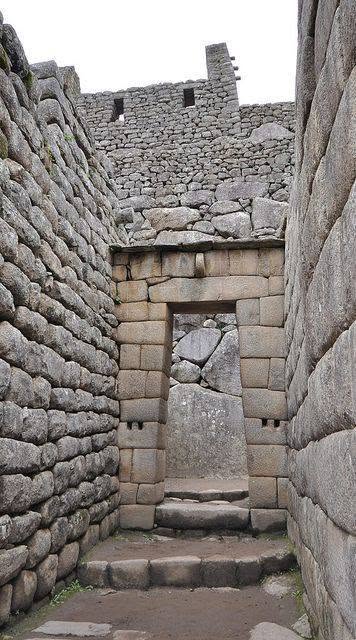
The primary material used for the portal is locally sourced white granite, an exceptionally hard and durable stone found in abundance around Machu Picchu. The construction technique is characteristic of the finest Inka masonry, known as ‘ashlar’. The surrounding walls, visible on both sides of the gateway, exhibit polygonal, or ‘pillow-faced’, stonework, where each block is meticulously shaped to fit against its neighbors with precision, creating a strong, load-bearing structure without the use of mortar. In stark contrast, the stones forming the portal itself—the jambs and the monolithic lintel—are dressed and smoothed to a near-perfect flat finish, highlighting their importance and creating a sharp visual boundary. The precision of this fit, even along the angled lines of the trapezoid, is a testament to the Inka masons’ sophisticated engineering and their ability to work stone with only simple bronze and stone tools.

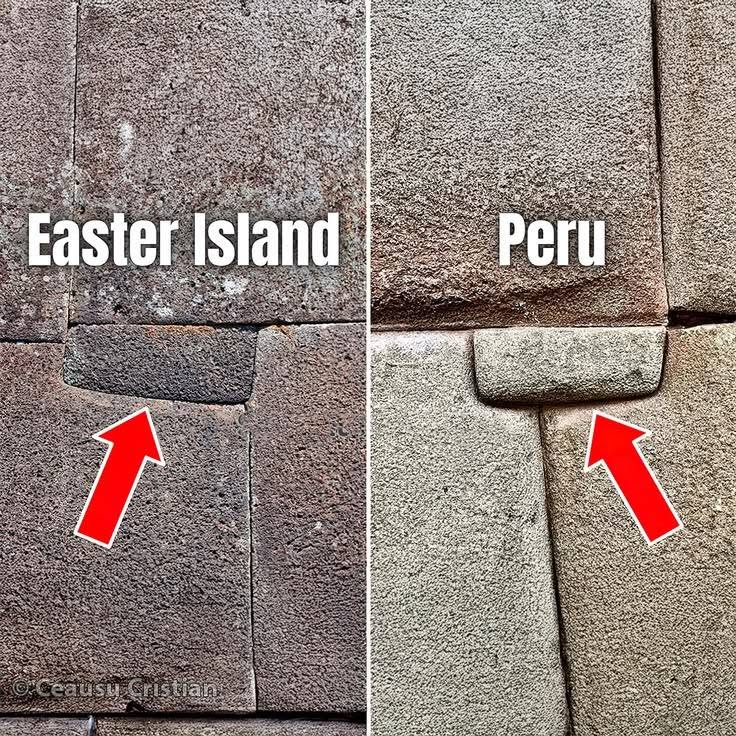
The most striking feature of this gateway is its trapezoidal shape. While this form was aesthetically pleasing to the Inka, its function was primarily structural and symbolic. The inward-sloping sides—wider at the base than at the top—provided greater stability against earthquakes, a critical consideration in the seismically active Andes. This shape is repeated in niches and doorways throughout the Inka Empire, creating a unified architectural language. The lintel is a single, heavy stone beam, carefully selected and positioned to span the opening. On the inner vertical jambs, small, carved stone pegs or protrusions are visible; these were likely used to secure a wooden door, which could be barred from the inside using rope or fabric, offering privacy and security for the space beyond. The ground level consists of uneven, rough-hewn stone steps, further emphasizing the structure’s organic integration with the rocky terrain.

Beyond its pragmatic use as an entryway, the trapezoidal portal carried profound cultural and cosmological significance. The meticulous, interlocking stonework was more than a building technique; it was a form of ‘sculpted landscape’, reflecting the Inka’s deep reverence for the earth (Pachamama) and the sacred mountains (Apu). Inka architecture was designed to honor and merge with, rather than dominate, the natural world. The view framed by this specific portal, looking towards the imposing mountain peak, would have been a focal point for meditation or ritual, aligning the built environment with the sacred geography of the Andes. The entire site of Machu Picchu is often interpreted as a vast, sacred landscape, and features like this gateway were essential nodes within a complex ritual pathway, guiding the movement of people and defining their spiritual journey.

The ‘discovery’ of Machu Picchu, and by extension this gateway, is typically credited to the American explorer Hiram Bingham III in 1911. Bingham, a lecturer in South American history at Yale University, was led to the site by local Quechua-speaking farmers who knew of its existence. Upon his arrival, Bingham was astounded by the preservation and scale of the ruins, which he initially believed to be the legendary “lost city of Vilcabamba,” the last stronghold of the Inka. While modern archaeology has since identified Vilcabamba as the site of Espiritu Pampa, Bingham’s initial explorations and subsequent expeditions sponsored by Yale University and the National Geographic Society brought Machu Picchu to global attention. His work involved extensive clearing and mapping, revealing the city from centuries of jungle overgrowth. Today, Machu Picchu, including its numerous well-preserved trapezoidal portals, is a UNESCO World Heritage site and one of the most significant archaeological sites in the Americas, continuously studied to understand the complexities of the Inka Empire.
💔 STELLA PARTON BREAKS HER SILENCE — What She Said About Dolly’s Health Has Fans Looking Back
Dolly Parton’s Sister Breaks Silence What Really Happened - GMT - G1
Stella Parton was born May 4, 1949, the sixth of twelve children raised by Robert Lee and Avie Lee Parton in Sevierville, Tennessee — a household defined by noise, limited money, and almost no privacy, the kind of environment that produced strong, determined personalities.
Stella was one of them.
By seven, she was appearing alongside her older sister Dolly on a Knoxville television program; by her teens, she was writing her own songs, though marriage and motherhood pulled music to the margins of her life for a stretch.
The dream never fully disappeared.

In 1967, she recorded a gospel album with her mother and sisters, and later worked clubs in Washington, D.C., before founding her own record label in 1975 and releasing “I Want to Hold You in My Dreams Tonight,” which climbed to number nine on the country charts.
Long before any of that commercial success, Stella had already shown a willingness to take positions others avoided.
At 26, amid backlash against Australian singer Olivia Newton-John for winning recognition in country music, Stella recorded “Ode to Olivia” in her defense — a stand that offered her no career benefit and real risk of criticism, but one she took anyway simply because she believed staying silent was the wrong choice.
That instinct defined the rest of her career: hits like “The Danger of a Stranger” and “Steady as the Rain” (written by Dolly) built a genuine, independent following, including in the U.K., while Stella also worked in New York theater and spoke openly, often controversially, about poverty, domestic violence, and the treatment of women in the music industry.
She was named the Christian Country Music Association’s Female Vocalist of the Year in 2004.
Through all of it, she remained defined publicly, more often than not, as simply “Dolly’s little sister” — a label she spent five decades quietly proving didn’t tell the full story.
That same directness is why her comments in the fall of 2025 carried real weight.
Stella had never positioned herself as the family’s image manager or spokesperson; she was, by reputation, someone who believed difficult truths shouldn’t stay hidden indefinitely.
What she described wasn’t dramatic or accusatory — it was a portrait of a woman who had spent years prioritizing everyone else’s needs over her own.
The context mattered.
Carl Dean, Dolly’s husband of nearly sixty years, died in March 2025 at 82, after a long illness during which Dolly had devoted herself almost entirely to his care.
She later acknowledged that in the process, she’d neglected her own health significantly.
The loss reverberated through the whole extended family — the Partons had lost three brothers in the years surrounding this period, compounding grief that, for a family that had once crowded twelve children into a single small home, meant losing pieces of a shared childhood one after another.
Stella herself went seven years without releasing new music during this stretch, later describing the period simply as one shaped by sorrow, while still speaking about the importance of finding moments of laughter within it.
Looking back, one moment reads very differently in hindsight than it did at the time: in late September 2025, Dolly postponed her planned Las Vegas residency, citing health challenges — a rare cancellation for a performer whose six-decade career had included very few of them.
At the time, most fans treated it as a minor, temporary setback.
Stella’s later reflections suggested the signs had actually been building for some time, visible to family in ways the public smile made easy to miss.
That concern crystallized publicly not long after, when Dolly’s younger sister Frieda posted a simple request on Facebook asking fans to pray for Dolly.
What looked at first like an ordinary, well-meaning gesture spread rapidly, sparking widespread speculation about how serious Dolly’s condition actually was.
Dolly herself responded directly within days, appearing in a video from a Grand Ole Opry commercial shoot, insisting with her familiar humor that she wasn’t finished yet — the now widely remembered “I ain’t dead yet” moment that briefly quieted public concern.
In the months that followed, the pattern repeated: reassuring updates about kidney stones, dehydration, and treatment, paired with continued work on new projects, right up until Dolly Parton’s death on August 25, 2026, at 80.
Looking back across that full timeline — the postponed residency, the family’s public worry, Stella’s own account of a sister who consistently deprioritized her own wellbeing — it becomes easier to see what the people closest to Dolly understood well before the rest of the world did: that the warmth and resilience the public saw every time she appeared on camera came at a real, largely invisible cost.