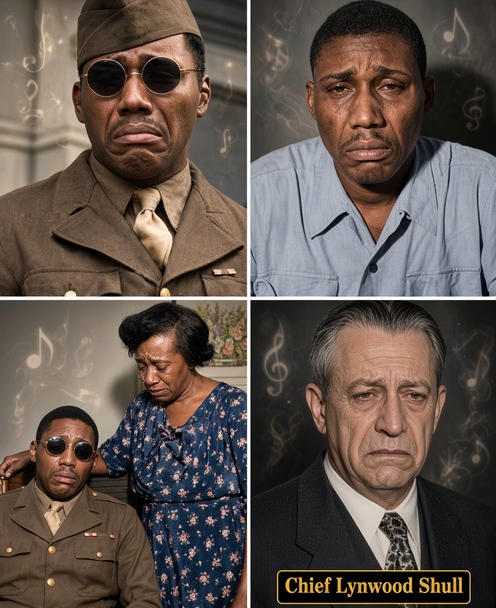
HE CAME HOME FROM WORLD WAR II IN UNIFORM — HOURS LATER, A POLICE BEATING LEFT HIM PERMANENTLY BLIND 💔🇺🇸

HE CAME HOME FROM WORLD WAR II IN UNIFORM — HOURS LATER, A POLICE BEATING LEFT HIM PERMANENTLY BLIND 💔🇺🇸
He came home from World War II wearing his Army uniform. Hours later, a police beating left him permanently blind.
Isaac Woodard had survived the war.
He had served his country in the Pacific, earned a battle star, and finally received his honorable discharge on February 12, 1946.
At 26 years old, he was supposed to be going home.
Instead, somewhere between Georgia and South Carolina, his journey became a nightmare.
Woodard was riding a bus toward his hometown when he asked the driver whether there would be enough time during a stop for him to use the restroom.
An argument followed.
When the bus reached Batesburg, South Carolina, the driver sought help from local police.
Woodard was taken off the bus.
What happened next would permanently change his life — and expose one of America’s ugliest contradictions.
Police Chief Lynwood Shull reportedly struck Woodard repeatedly with a blackjack.
The blows landed on his head.
Then his eyes.
Again and again.
By the time the attack was over, both of Woodard’s eyes had been ruptured.
The soldier who had just returned from serving America could no longer see.
But the nightmare didn’t end there.
Woodard was taken to jail.
The following morning, despite being unable to see, he was brought before a local judge and charged with being drunk and disorderly.
The court gave the blinded veteran a choice:
Pay a $50 fine.
Or spend 30 days on a chain gang.
Think about that for a moment.
A Black Army veteran had just returned from a war fought in the name of democracy.
A police officer had beaten him until he lost his eyesight.
And the first response of the local justice system was to punish him.
Doctors at a Veterans Administration hospital in Columbia later determined that the damage was permanent.
There was no surgery that could give Woodard his vision back.
He had survived the Pacific.
He had made it home.
And within hours of leaving the Army, he had been robbed of his sight.
Then his story began reaching far beyond South Carolina.
The NAACP took up his case.
Radio personality Orson Welles spoke publicly about the attack.
Eventually, investigators identified Lynwood Shull as the officer responsible.
And suddenly, the story of one blinded veteran became a national civil rights issue.
Woodard’s case attracted enormous attention.
In August 1946, nearly 20,000 people filled New York’s Lewisohn Stadium for a benefit organized in his honor. Thousands more reportedly couldn’t get inside.
Joe Louis was involved.
So were major performers including Billie Holiday, Count Basie, Pearl Bailey, Woody Guthrie, and the King Cole Trio.
When Woodard appeared before the crowd, the applause reportedly lasted for several minutes.
But he didn’t use the moment simply to talk about revenge.
He spoke about what had happened to him and expressed hope that his suffering could help prevent someone else from experiencing the same thing.
Then came the courtroom.
On November 5, 1946, Woodard testified against Lynwood Shull in federal court.
He had lost his eyesight.
But he still came forward.
The trial was brief.
The jury was entirely white.
And after a short deliberation, Shull was acquitted.
The man accused of beating a young Black veteran blind walked out of the courtroom a free man.
Woodard had lost his sight.
And now he had lost faith that the justice system would punish the person responsible.
But the story wasn’t over.
Someone else had been listening.
Federal Judge J. Waties Waring presided over the case. What he encountered through Woodard’s testimony and the broader racial injustice surrounding the case would contribute to his later transformation into an outspoken critic of segregation.
Waring would eventually become the lone dissenting judge in Briggs v. Elliott, a school-segregation case that became part of the landmark Brown v. Board of Education decision.
And Woodard’s case was reaching the White House.
President Harry Truman met with NAACP leaders in September 1946 to discuss racial violence against Black Americans, particularly Black veterans returning from World War II.
Woodard’s beating became one of the cases placed directly before the administration.
Truman began asking whether the federal government needed to do more than investigate individual incidents after they happened.
Something larger followed.
In December 1946, Truman created the President’s Committee on Civil Rights.
Its 1947 report called for stronger federal protection of civil rights and attacked some of the nation’s most deeply rooted forms of racial inequality.
Then, on July 26, 1948, Truman signed Executive Order 9981.
It declared that there should be equality of treatment and opportunity in the U.S. armed forces regardless of race, color, religion, or national origin.
The military was not transformed overnight.
And Isaac Woodard did not single-handedly end segregation.
That victory belonged to generations of Black veterans, activists, lawyers, organizers, and ordinary Americans who fought against racial discrimination.
But Woodard’s story became impossible to ignore because it revealed a devastating contradiction.
America had sent a Black man overseas to fight for freedom.
He returned home in uniform.
And his own country allowed a police officer to beat him blind without ever holding that officer criminally accountable.
Woodard eventually rebuilt his life in New York.
He learned to live without the eyesight he had once taken for granted. His disability benefits eventually improved, and he invested in property in the Bronx.
But he carried the consequences of that night for the rest of his life.
In September 1992, Isaac Woodard died at 73.
He was buried at Calverton National Cemetery among fellow veterans.
He never saw the world again.
He never saw the people who came after him.
He never saw the changes his case helped inspire.
And Lynwood Shull was never convicted for blinding him.
For years, Woodard’s name slowly disappeared from the national conversation.
But the story should never have been forgotten.
Because before many of the civil rights battles Americans recognize today, there was a 26-year-old Black soldier sitting in a courtroom, unable to see the judge who was sentencing him.
He had fought America’s war.
Now America had to confront what happened when he came home.
They took his eyesight.
They couldn’t erase what his story revealed.

💔 STELLA PARTON BREAKS HER SILENCE — What She Said About Dolly’s Health Has Fans Looking Back


Dolly Parton’s Sister Breaks Silence What Really Happened - GMT - G1

Stella Parton was born May 4, 1949, the sixth of twelve children raised by Robert Lee and Avie Lee Parton in Sevierville, Tennessee — a household defined by noise, limited money, and almost no privacy, the kind of environment that produced strong, determined personalities.

Stella was one of them.

By seven, she was appearing alongside her older sister Dolly on a Knoxville television program; by her teens, she was writing her own songs, though marriage and motherhood pulled music to the margins of her life for a stretch.

The dream never fully disappeared.

Stella Parton

In 1967, she recorded a gospel album with her mother and sisters, and later worked clubs in Washington, D.C., before founding her own record label in 1975 and releasing “I Want to Hold You in My Dreams Tonight,” which climbed to number nine on the country charts.

Long before any of that commercial success, Stella had already shown a willingness to take positions others avoided.

At 26, amid backlash against Australian singer Olivia Newton-John for winning recognition in country music, Stella recorded “Ode to Olivia” in her defense — a stand that offered her no career benefit and real risk of criticism, but one she took anyway simply because she believed staying silent was the wrong choice.

That instinct defined the rest of her career: hits like “The Danger of a Stranger” and “Steady as the Rain” (written by Dolly) built a genuine, independent following, including in the U.K., while Stella also worked in New York theater and spoke openly, often controversially, about poverty, domestic violence, and the treatment of women in the music industry.

She was named the Christian Country Music Association’s Female Vocalist of the Year in 2004.

Through all of it, she remained defined publicly, more often than not, as simply “Dolly’s little sister” — a label she spent five decades quietly proving didn’t tell the full story.

That same directness is why her comments in the fall of 2025 carried real weight.

Stella had never positioned herself as the family’s image manager or spokesperson; she was, by reputation, someone who believed difficult truths shouldn’t stay hidden indefinitely.

What she described wasn’t dramatic or accusatory — it was a portrait of a woman who had spent years prioritizing everyone else’s needs over her own.

The context mattered.

Carl Dean, Dolly’s husband of nearly sixty years, died in March 2025 at 82, after a long illness during which Dolly had devoted herself almost entirely to his care.

She later acknowledged that in the process, she’d neglected her own health significantly.

The loss reverberated through the whole extended family — the Partons had lost three brothers in the years surrounding this period, compounding grief that, for a family that had once crowded twelve children into a single small home, meant losing pieces of a shared childhood one after another.

Stella herself went seven years without releasing new music during this stretch, later describing the period simply as one shaped by sorrow, while still speaking about the importance of finding moments of laughter within it.

Looking back, one moment reads very differently in hindsight than it did at the time: in late September 2025, Dolly postponed her planned Las Vegas residency, citing health challenges — a rare cancellation for a performer whose six-decade career had included very few of them.

At the time, most fans treated it as a minor, temporary setback.

Stella’s later reflections suggested the signs had actually been building for some time, visible to family in ways the public smile made easy to miss.

That concern crystallized publicly not long after, when Dolly’s younger sister Frieda posted a simple request on Facebook asking fans to pray for Dolly.

What looked at first like an ordinary, well-meaning gesture spread rapidly, sparking widespread speculation about how serious Dolly’s condition actually was.

Dolly herself responded directly within days, appearing in a video from a Grand Ole Opry commercial shoot, insisting with her familiar humor that she wasn’t finished yet — the now widely remembered “I ain’t dead yet” moment that briefly quieted public concern.

In the months that followed, the pattern repeated: reassuring updates about kidney stones, dehydration, and treatment, paired with continued work on new projects, right up until Dolly Parton’s death on August 25, 2026, at 80.

Looking back across that full timeline — the postponed residency, the family’s public worry, Stella’s own account of a sister who consistently deprioritized her own wellbeing — it becomes easier to see what the people closest to Dolly understood well before the rest of the world did: that the warmth and resilience the public saw every time she appeared on camera came at a real, largely invisible cost.

Related Posts

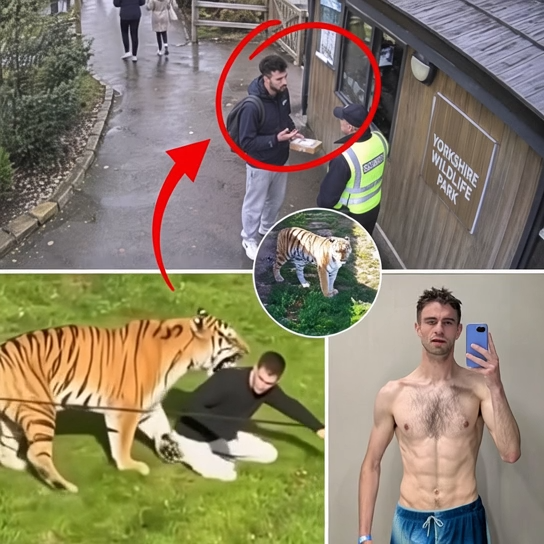
😱💔 WHAT DID WILLIAM CHAPMAN ASK THE SECURITY GUARD BEFORE THE TIGER TRAGEDY? An Alleged Final Conversation at Yorkshire Wildlife Park Has Raised One Heartbreaking Question!

😱💔 WHAT DID WILLIAM CHAPMAN ASK THE SECURITY GUARD BEFORE THE TIGER TRAGEDY? An Alleged Final Conversation at Yorkshire Wildlife Park Has Raised One Heartbreaking Question!

A Routine Encounter That Became an Unforgettable Memory A brief conversation at a security post inside Yorkshire Wildlife Park became the center of a deeply emotional account…

🐅😱 WHAT HAPPENED TO THE TIGER AFTER WILLIAM CHAPMAN’S REPORTED DEATH? An Alleged Emergency Meeting at Yorkshire Wildlife Park Raises Questions About the Animal’s Ultimate Fate!

🐅😱 WHAT HAPPENED TO THE TIGER AFTER WILLIAM CHAPMAN’S REPORTED DEATH? An Alleged Emergency Meeting at Yorkshire Wildlife Park Raises Questions About the Animal’s Ultimate Fate!

A Tragedy That Left Another Difficult Question Unanswered The aftermath of the tiger attack involving William Chapman at Yorkshire Wildlife Park brought an immediate focus on the…

🚨🔥 HE SUDDENLY STOPPED, TURNED HIS HEAD, AND THEN SOMETHING UNEXPECTED HAPPENED! A Chilling Account of William Chapman’s Final Moments Raises One Disturbing Question!

🚨🔥 HE SUDDENLY STOPPED, TURNED HIS HEAD, AND THEN SOMETHING UNEXPECTED HAPPENED! A Chilling Account of William Chapman’s Final Moments Raises One Disturbing Question!

The 17 Seconds That Became the Focus of the Investigation Seventeen seconds. That was the length of a security camera recording that became central to a disturbing…

💔🐅 A MYSTERIOUS NOTE FOUND INSIDE WILLIAM CHAPMAN’S JACKET? An Emotional Story From the Yorkshire Tiger Tragedy Claims His Family Discovered a Final Message — But What Did the Last Line Say?

💔🐅 A MYSTERIOUS NOTE FOUND INSIDE WILLIAM CHAPMAN’S JACKET? An Emotional Story From the Yorkshire Tiger Tragedy Claims His Family Discovered a Final Message — But What Did the Last Line Say?

 A Discovery Among the Belongings He Left Behind In the aftermath of the tragedy involving William Chapman and a tiger at Yorkshire Wildlife Park, his family faced…

🚨😱 SHOCKING TOXICOLOGY CLAIMS IN THE YORKSHIRE TIGER TRAGEDY! An Allegedly Unsealed Report Raises Disturbing Questions About William Chapman’s Final Hours — But What Does the Evidence Really Show?

🚨😱 SHOCKING TOXICOLOGY CLAIMS IN THE YORKSHIRE TIGER TRAGEDY! An Allegedly Unsealed Report Raises Disturbing Questions About William Chapman’s Final Hours — But What Does the Evidence Really Show?

“THE AUTOPSY TOXICOLOGY DOSSIER”: Unsealed Medical Examiner Extractions and Biochemical Audits Reveal Positive Illicit Substance Telemetry Prior to William Chapman Tiger Enclosure Incident DONCASTER, United Kingdom —…

😱🧪 A SHOCKING AUTOPSY TWIST IN THE YORKSHIRE TIGER TRAGEDY? Unverified Claims About William Chapman’s Last Meal and Medication Have Raised a Mysterious New Question!

😱🧪 A SHOCKING AUTOPSY TWIST IN THE YORKSHIRE TIGER TRAGEDY? Unverified Claims About William Chapman’s Last Meal and Medication Have Raised a Mysterious New Question!

A Discovery That Changed the Direction of the Investigation The circumstances surrounding William Chapman’s final hours at Yorkshire Wildlife Park have taken an unexpected turn in a…

Leave a Reply

Your email address will not be published. Required fields are marked *