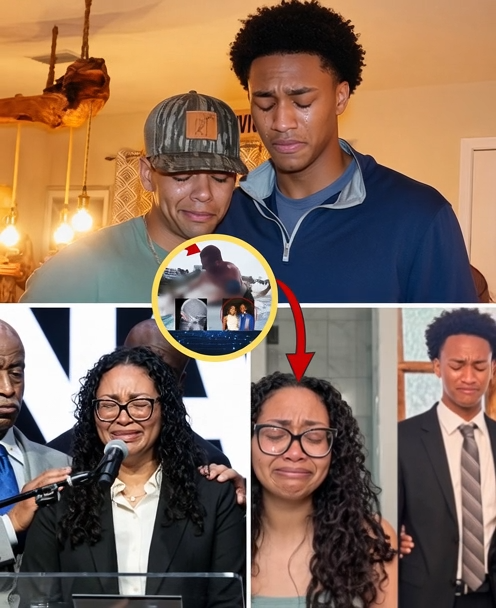
FIRED AMID THE FALLOUT: Nolan Wells’ Mother Says She Lost Her Job As Her Family Faced Racist Attacks
FIRED AMID THE FALLOUT: Nolan Wells’ Mother Says She Lost Her Job As Her Family Faced Racist Attacks
The fallout surrounding Nolan Wells’ death continues to grow far beyond the investigation itself.
Nolan’s mother says she was fired from her job after reports emerged of racist attacks targeting her family, while authorities have said Nolan had been drinking before he disappeared on Horn Island.
The full details are in the comments below
Christine Wonsley, the mother of 18-year-old Nolan Xavier Wells, has stated that she lost her job after her family became the target of racist attacks online following the teenager’s disappearance and death, while at the same time new reports claiming that Nolan had been drinking heavily before he vanished have added another painful layer to the family’s ordeal.
The family has strongly disputed the drinking narrative, insisting the allegations do not reflect what they believe happened during Nolan’s final hours and that the focus must remain on establishing the full truth through a thorough and transparent investigation.
These developments form part of the intensifying public pressure and secondary consequences surrounding the still-unresolved case of the Ocean Springs student-athlete whose body was recovered on Horn Island two days after a July 4 boat outing with friends.
Nolan Wells left home on the evening of July 3, 2026, telling his parents he would spend the holiday weekend with friends.
On July 4 he joined a group that traveled by boat to Horn Island, a remote barrier island roughly ten miles off the Mississippi Gulf Coast that draws large crowds of boaters for holiday gatherings and has no permanent facilities, drinking water, or staff.
He did not return with the group that afternoon.
His mother reported him missing late that night after receiving a call from one of the friends.
An extensive multi-agency search involving the Jackson County Sheriff’s Office, the U.S.
Coast Guard, the Mississippi Department of Marine Resources, the National Park Service, and volunteer groups including the United Cajun Navy continued until a park ranger located a body matching Wells’ description on the northwestern shoreline of the island on the morning of July 6.
Identification was confirmed through dental records the following day.
From the outset the sheriff’s office stated there was no initial indication of foul play while emphasizing that investigators were working diligently to determine exactly what occurred.
An independent forensic pathologist retained by the Wells family later concluded that both the cause and manner of death were undetermined pending further investigation.
The official state autopsy performed by the Mississippi State Medical Examiner’s Office and the ᴀssociated toxicology testing have been completed but remain sealed as the matter moves toward eventual presentation to a grand jury.
District Attorney Angel Myers McIlrath has stated that every non-natural death in the county is handled in the same manner and will be presented to a grand jury, that investigators are examining every piece of evidence and every credible lead, and that professional rules restrict the public release of information during an active investigation.
She has also warned that unfounded rumors circulating online threaten to compromise the search for the truth and has urged the public to allow the process to proceed without external pressure that could taint the evidence.
Against this backdrop of pending forensic results, a July 5 Mississippi Department of Marine Resources Marine Patrol email sent to U.S.
Coast Guard authorities during the search listed Wells’ physical description, last known location, and the notation “Alcohol intake: Heavy.”
The document did not identify the source of that information, though subsequent reporting indicated it reflected statements from witnesses who told investigators that Wells had been drinking heavily while partying with friends on the island.
Friends who were present have acknowledged that alcohol was circulating among the larger holiday crowd of several hundred people and that some members of the group, including Wells, had consumed alcohol.
Warren Hudson, who has described himself as Wells’ best friend, stated that Wells was drinking yet appeared completely fine in the conversations they had that day.
A spokesman for a volunteer search organization earlier indicated his understanding that Wells’ blood-alcohol level was not at an intoxicated threshold, though that observation preceded any official laboratory results.
The family has strongly disputed the narrative that heavy drinking explains the events of Nolan’s final hours, pointing instead to his focus on football training and the responsibilities that lay immediately ahead.
They have insisted that the allegations do not reflect the young man they knew and that the emphasis should remain on establishing a complete factual record rather than on characterizations that they believe obscure more important questions.
The professional and personal attacks reported by the family intensified as Christine Wonsley spoke publicly about the unanswered questions.
Supporters flagged a wave of one-star Google reviews on her Memorial Physician Clinics Primary Care profile that appeared in the period following Nolan’s death and the family’s decision to pursue a private investigation.
The reviews questioned her ability to care for patients.
Christine had not returned to work since July 3, first because of the holiday and then because of bereavement.
The timing of the negative reviews was described by those supporting the family as anything but subtle.
In addition to the workplace campaign, anonymous hate mail reached the home, and online commentary questioned the parents’ motives, their fundraising efforts, and their parenting.
Elmore Wonsley told interviewers that the family cannot grieve the way they need to because they are being disrespected and labeled in ways that do not reflect how they were raised or how they raised their children.
He asked where the empathy is for parents who have lost a child and simply want the truth.
The family’s determination to obtain a full accounting has been met with both support and intense pushback.
They retained Ben Crump shortly after the body was recovered.
Crump’s team commissioned an independent forensic examination, issued preservation letters and subpoenas to technology and social-media companies seeking account records and location data connected to Wells’ devices, and retained experts to review the Sea Tow audio and related tidal and environmental information.
Crump has repeatedly stated that the family is not trying to cast aspersions on anyone but simply wants the truth that any parent would demand.
He has pointed to contradictions in the accounts of the final hours, the handling of the phone, and the independent pathologist’s inability to determine cause and manner of death as reasons the inquiry must continue without premature conclusions.
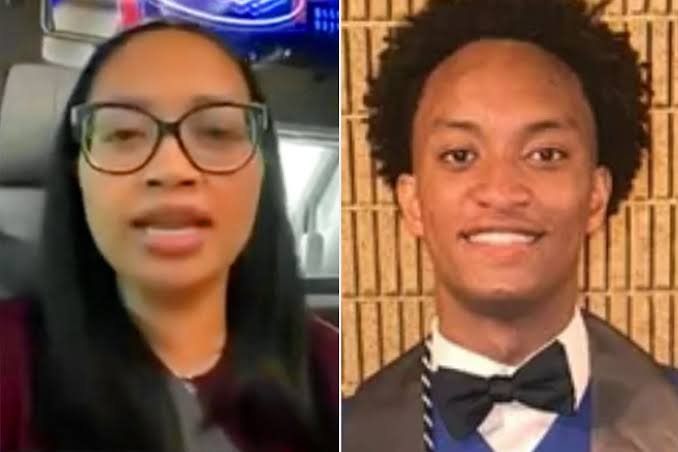
Governor Tate Reeves has publicly expressed confidence in the local and state investigators handling the case.
In his first comments on the matter he stated that he knows Sheriff John Ledbetter well and has full confidence the sheriff will do his job.
He said he had not yet seen any fact or piece of evidence suggesting foul play, but that if such evidence exists he is confident the sheriff’s office, the district attorney’s office, and the Department of Public Safety will find it and take the necessary steps.
In later remarks the governor went further, stating that Ben Crump and Al Sharpton are to blame for the threats that have accompanied the case and that they are stoking division for personal gain.
He expressed confidence that Jackson County law enforcement, the Department of Public Safety, and the State Medical Examiner are conducting a thorough investigation that will follow the facts wherever they lead.
Mississippi Department of Public Safety Commissioner Sean Tindell confirmed that the FBI is examining threats directed at public officials, possible witnesses, and people connected to the events of July 4, including Wells’ mother.
Attorney General Lynn Fitch stated that her office will hold accountable anyone who threatens law enforcement working the case.
The exchange of public statements between the governor’s office and the family’s legal team has occurred against a backdrop of intense online speculation, documented threats against multiple parties, and secondary legal actions.
A California man has been charged with sending graphic threats to Judge Ashlee Cole.
Bart Edmiston Jr., a former high-school teammate who ᴀssisted a distressed boat that day, retained attorney Russ Latino after viral social-media accusations linking him to Wells’ death escalated into death threats against him and his family.
Latino stated that a widely shared pH๏τo had been misidentified, that the woman pictured is not Katie McCormick, and that his client did not know the woman before Wells’ death.
Other young people connected to the outing and their parents have reported similar harᴀssment.
The intensity of the online reaction has produced both formal federal charges and private legal responses aimed at curbing defamation and threats.
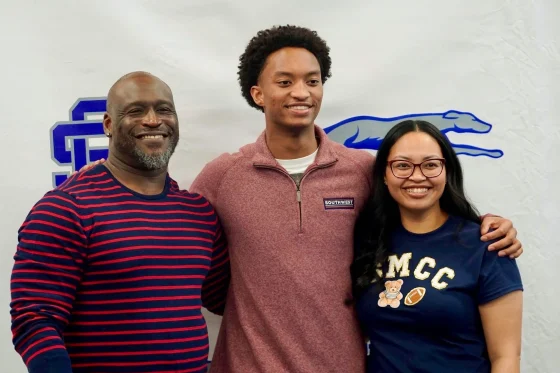
Governor Reeves has expressed full confidence in Sheriff John Ledbetter and the state investigators, stated that he has seen no evidence of foul play, and criticized outside activists for stoking division.
The Wells family and Crump have continued to call for a complete accounting, pointing to contradictions in the accounts of the final hours, the handling of the phone, the independent pathologist’s undetermined findings, and the need for all digital and physical evidence to be preserved and examined.
District Attorney Angel Myers McIlrath has stated that every non-natural death in the county is handled in the same manner, that the case will be presented to a grand jury, and that professional rules limit what can be said publicly while the investigation is active.
She has also warned that unfounded rumors circulating online threaten to compromise the search for the truth.
The dramatic framing of a “brutal gaslighting campaign,” an “inevitable downfall” of the governor, or any quotation attributing cold calculated indifference or enjoyment of another’s downfall to any party does not appear in the verified public record.
The actual public record consists of the governor’s statements of confidence in local and state investigators and his criticism of outside voices he believes inflame division, the family’s continued demand for a full and transparent investigation, the pending forensic results, the documented threats that have produced separate federal and state criminal charges against individuals who crossed into illegal conduct, and the formal process still underway.
The difference in emphasis between the two sides is real and public.
It does not, on the available evidence, consтιтute the melodramatic confrontation described in the circulating headline.
The investigation into the death of Nolan Wells remains active.
The official toxicology results, the complete digital analysis of the recovered phone, and the full investigative file have not been released.
Until those materials are available and tested through the appropriate legal process, competing public narratives will continue.
The family’s position is that they will not rest until they obtain a complete accounting of their son’s final hours.
The governor’s position is that local and state investigators should be allowed to complete their work and that outside pressure he views as inflammatory does not help that process.
The truth, when it is established, will rest on verified evidence rather than on polarized public statements from any side.
The loss of Nolan Wells is complete.
The official work of determining what can be known about the circumstances is still underway.
💔 STELLA PARTON BREAKS HER SILENCE — What She Said About Dolly’s Health Has Fans Looking Back
Dolly Parton’s Sister Breaks Silence What Really Happened - GMT - G1
Stella Parton was born May 4, 1949, the sixth of twelve children raised by Robert Lee and Avie Lee Parton in Sevierville, Tennessee — a household defined by noise, limited money, and almost no privacy, the kind of environment that produced strong, determined personalities.
Stella was one of them.
By seven, she was appearing alongside her older sister Dolly on a Knoxville television program; by her teens, she was writing her own songs, though marriage and motherhood pulled music to the margins of her life for a stretch.
The dream never fully disappeared.

In 1967, she recorded a gospel album with her mother and sisters, and later worked clubs in Washington, D.C., before founding her own record label in 1975 and releasing “I Want to Hold You in My Dreams Tonight,” which climbed to number nine on the country charts.
Long before any of that commercial success, Stella had already shown a willingness to take positions others avoided.
At 26, amid backlash against Australian singer Olivia Newton-John for winning recognition in country music, Stella recorded “Ode to Olivia” in her defense — a stand that offered her no career benefit and real risk of criticism, but one she took anyway simply because she believed staying silent was the wrong choice.
That instinct defined the rest of her career: hits like “The Danger of a Stranger” and “Steady as the Rain” (written by Dolly) built a genuine, independent following, including in the U.K., while Stella also worked in New York theater and spoke openly, often controversially, about poverty, domestic violence, and the treatment of women in the music industry.
She was named the Christian Country Music Association’s Female Vocalist of the Year in 2004.
Through all of it, she remained defined publicly, more often than not, as simply “Dolly’s little sister” — a label she spent five decades quietly proving didn’t tell the full story.
That same directness is why her comments in the fall of 2025 carried real weight.
Stella had never positioned herself as the family’s image manager or spokesperson; she was, by reputation, someone who believed difficult truths shouldn’t stay hidden indefinitely.
What she described wasn’t dramatic or accusatory — it was a portrait of a woman who had spent years prioritizing everyone else’s needs over her own.
The context mattered.
Carl Dean, Dolly’s husband of nearly sixty years, died in March 2025 at 82, after a long illness during which Dolly had devoted herself almost entirely to his care.
She later acknowledged that in the process, she’d neglected her own health significantly.
The loss reverberated through the whole extended family — the Partons had lost three brothers in the years surrounding this period, compounding grief that, for a family that had once crowded twelve children into a single small home, meant losing pieces of a shared childhood one after another.
Stella herself went seven years without releasing new music during this stretch, later describing the period simply as one shaped by sorrow, while still speaking about the importance of finding moments of laughter within it.
Looking back, one moment reads very differently in hindsight than it did at the time: in late September 2025, Dolly postponed her planned Las Vegas residency, citing health challenges — a rare cancellation for a performer whose six-decade career had included very few of them.
At the time, most fans treated it as a minor, temporary setback.
Stella’s later reflections suggested the signs had actually been building for some time, visible to family in ways the public smile made easy to miss.
That concern crystallized publicly not long after, when Dolly’s younger sister Frieda posted a simple request on Facebook asking fans to pray for Dolly.
What looked at first like an ordinary, well-meaning gesture spread rapidly, sparking widespread speculation about how serious Dolly’s condition actually was.
Dolly herself responded directly within days, appearing in a video from a Grand Ole Opry commercial shoot, insisting with her familiar humor that she wasn’t finished yet — the now widely remembered “I ain’t dead yet” moment that briefly quieted public concern.
In the months that followed, the pattern repeated: reassuring updates about kidney stones, dehydration, and treatment, paired with continued work on new projects, right up until Dolly Parton’s death on August 25, 2026, at 80.
Looking back across that full timeline — the postponed residency, the family’s public worry, Stella’s own account of a sister who consistently deprioritized her own wellbeing — it becomes easier to see what the people closest to Dolly understood well before the rest of the world did: that the warmth and resilience the public saw every time she appeared on camera came at a real, largely invisible cost.